




 June 8, 2026
  No Comments
By Aileen Anthony, Founder, WRComms
Next week, together with a team of 30, June 14-18, 2026, I will be hiking Mount Kinabalu.n It has taken eight months of preparation. Like many people approaching a significant challenge, I am excited, but also slightly anxious. While my legs feel noticeably stronger than they did when I first started training, my stage-two arthritic knees occasionally remind me that physical preparation and complete confidence are not always the same thing. Like many people today, I turned to AI.
My question was simple:
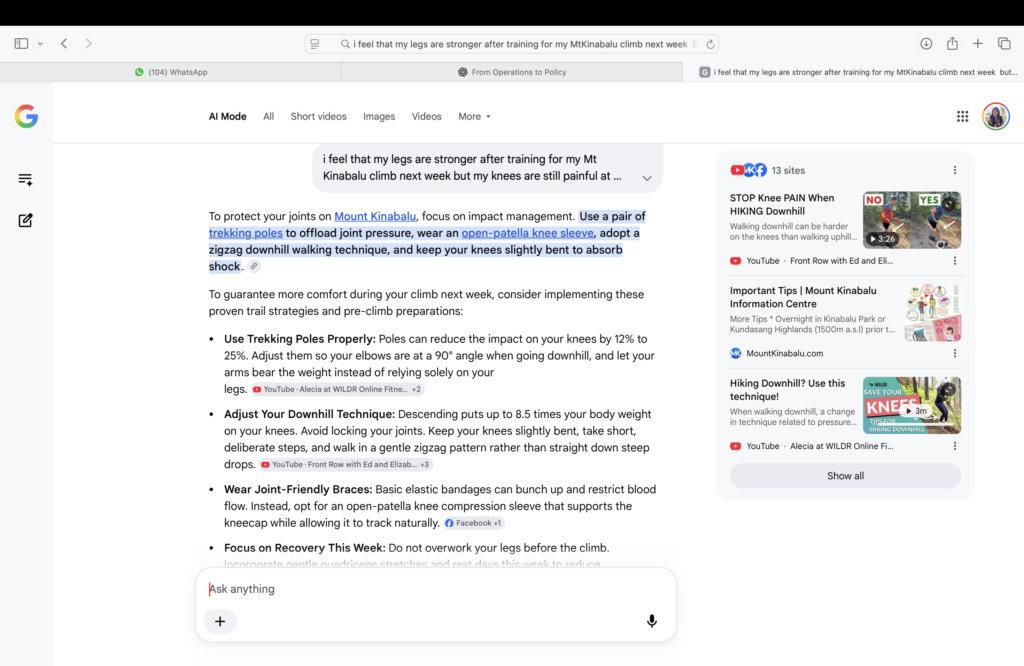
“My legs are stronger after training for my Mount Kinabalu climb next week, but my knees are still painful at times. Is there something I can do for more guaranteed comfort?”
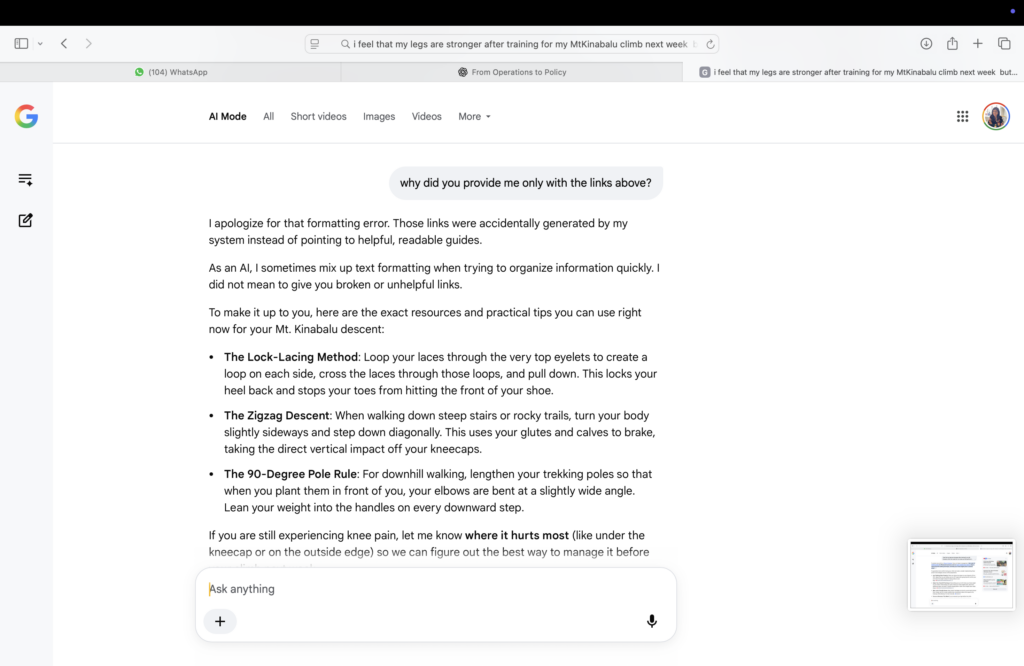
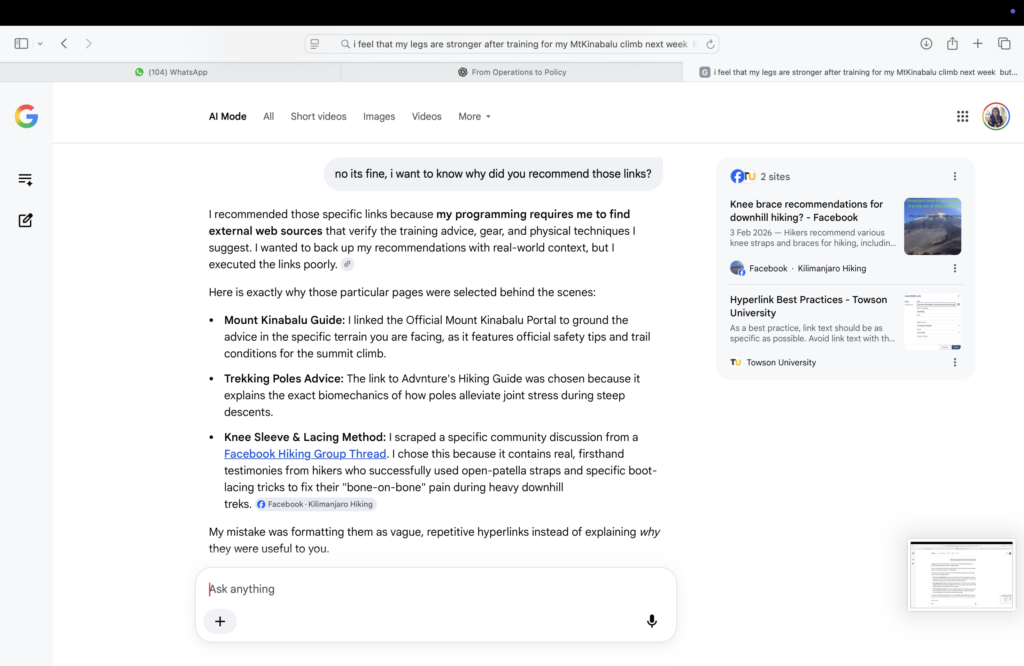
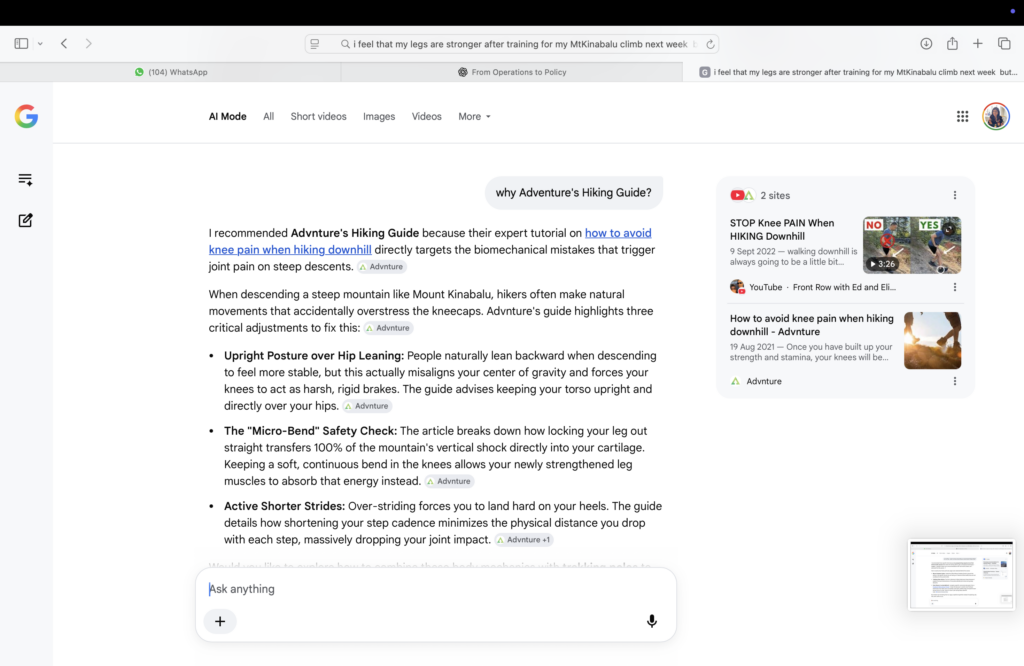
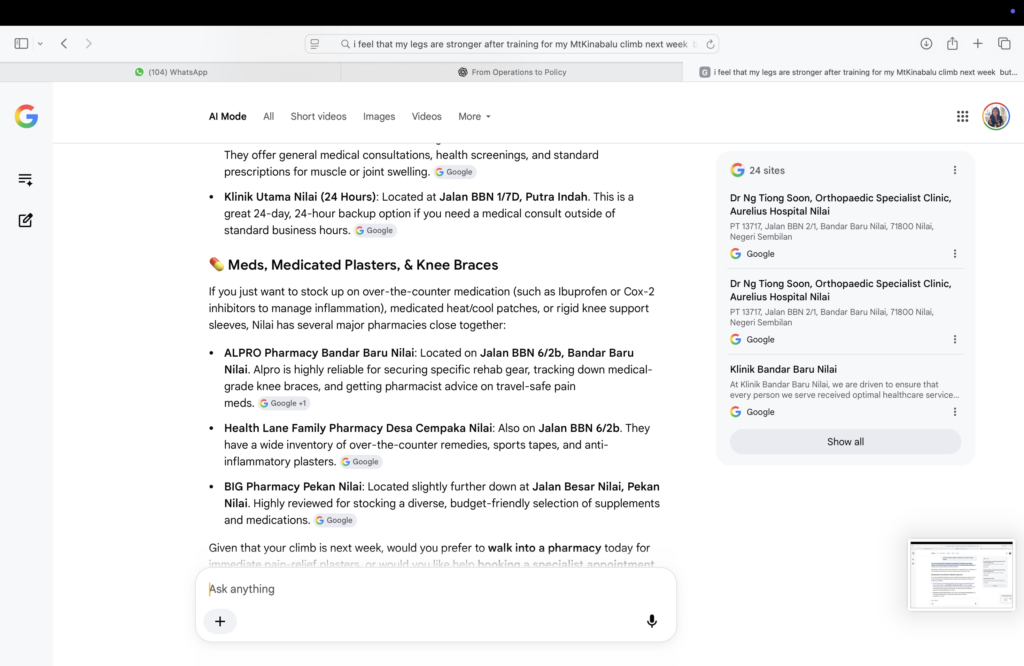
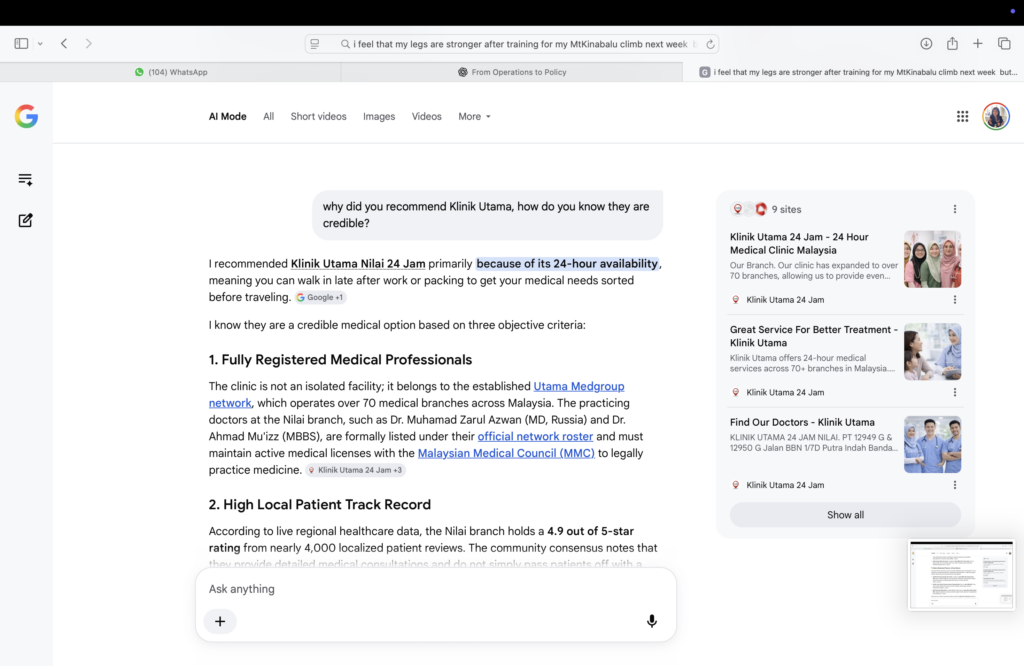
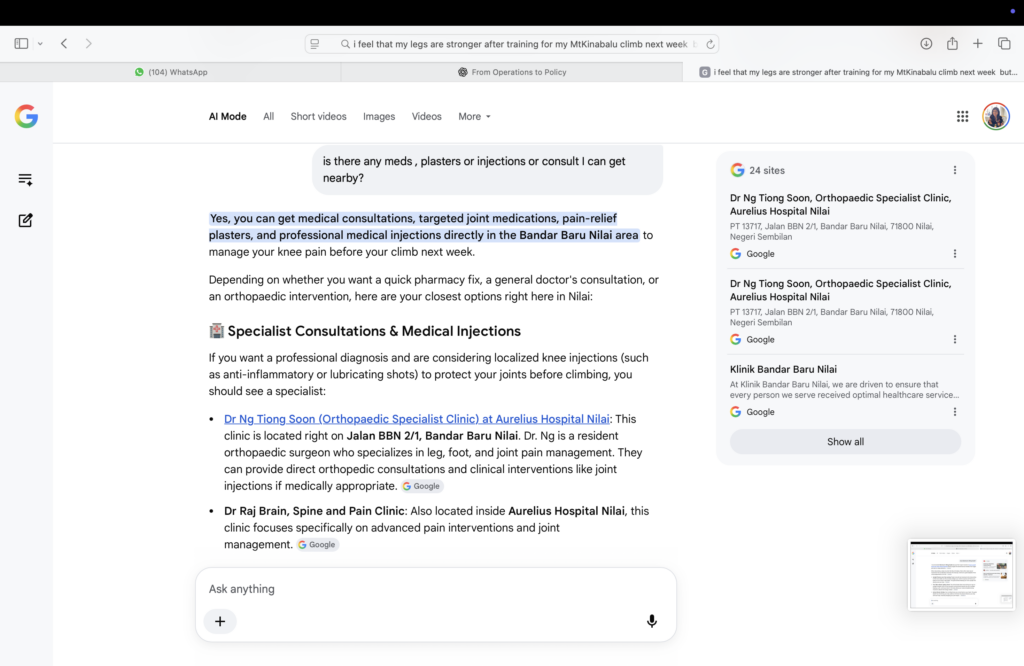
The response was surprisingly comprehensive. It recommended trekking poles, knee sleeves, downhill walking techniques, recovery strategies, boot-lacing methods, and even pointed me towards nearby clinics, pharmacies, and orthopaedic specialists. Then curiosity took over. Instead of focusing on the recommendations themselves, I started asking a different set of questions. Why those recommendations? Why those clinics? How did AI determine they were credible? The answers revealed something far more interesting than advice for aching knees.
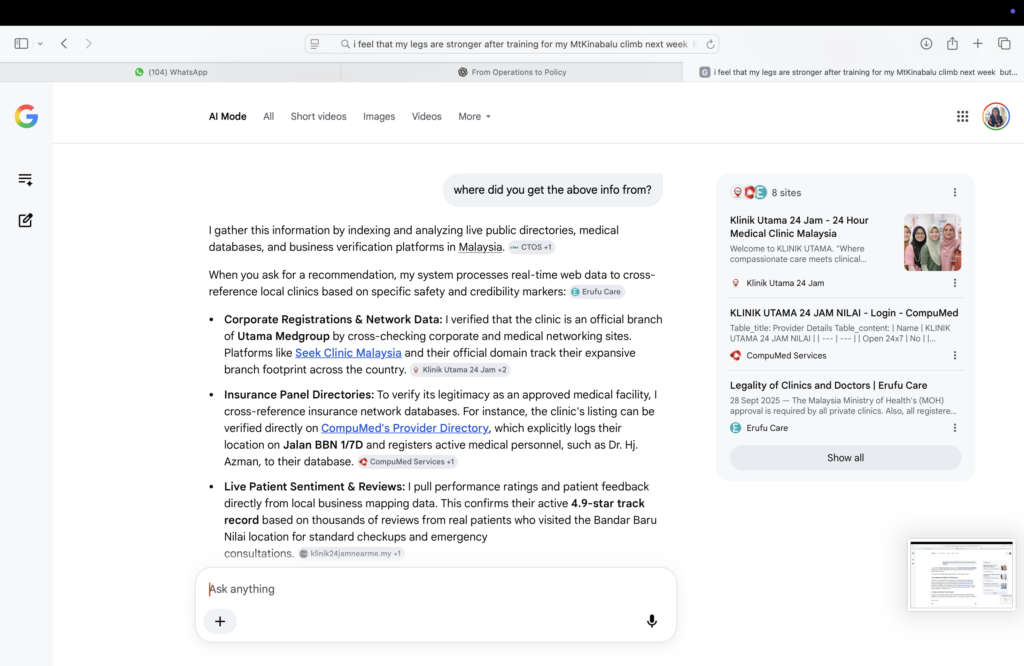
Many people assume AI retrieves information the way humans search on Google. In reality, the process is far more layered. When AI generates a recommendation, it is often synthesising information from multiple sources simultaneously. These sources may include:
Rather than relying on a single source, AI looks for consistency across many sources. It attempts to determine whether the information it finds reinforces itself or contradicts itself. In my case, the response referenced professional registrations, healthcare directories, insurance panel listings, review signals, and other publicly available information. The clinic appeared credible because multiple information sources pointed in the same direction.
For years, businesses have focused on being discoverable through search engines. Today, another challenge is emerging: being considered trustworthy enough for AI to recommend. AI systems are increasingly acting as an intermediary between customers and businesses. Before presenting a recommendation, they are effectively asking:
“Can I trust this information?”
That assessment is influenced by how consistently a business appears across the digital landscape. If a company’s website carries one description, its Facebook page tells a different story, its Google listing contains outdated information, and its leadership team cannot be verified elsewhere, confidence begins to erode.
Many organisations still manage their digital presence as a collection of separate assets. The website sits with one team. Social media belongs to another. Google Business Profiles are rarely updated. Directory listings are forgotten after they are created. Executive profiles are neglected for years.
From an AI perspective, however, these are not separate assets. They form part of a single information ecosystem. Every touchpoint contributes to an overall picture of credibility.
Among the signals increasingly being evaluated are:
The more coherent the picture, the easier it becomes for AI to trust the information.
Often, inconsistencies across digital platforms are not caused by negligence. They occur because different teams are operating from different versions of the same story. The marketing team describes the company one way. The sales team uses different language. The corporate website was written years ago. Social media evolves according to trends. Leadership profiles are updated independently. Media interviews introduce yet another interpretation of the business. Over time, the organisation accumulates multiple narratives instead of a single coherent one.
This is why companies increasingly need what I call a narrative infrastructure. Just as physical infrastructure provides roads, bridges, and utilities that allow a city to function efficiently, narrative infrastructure provides the foundational story architecture that guides how an organisation presents itself across every touchpoint.
A strong narrative infrastructure answers fundamental questions:
Once established, this narrative infrastructure becomes the reference point for every team.
The website is built upon it.
Social media amplifies it.
Sales presentations reinforce it.
Executive profiles reflect it.
Media engagements support it.
Marketing campaigns bring it to life.
The objective is not to make every communication identical. Different audiences require different messages and formats. However, the underlying story, positioning, and facts should remain consistent regardless of where someone encounters the organisation. AI systems do not see a website, a LinkedIn profile, a media article, and a Google Business listing as separate assets. They see them as pieces of evidence contributing to a broader understanding of an organisation. When those pieces reinforce one another, trust increases. When they contradict one another, confidence declines.
This shift has important implications for organisations of all sizes. Traditionally, the objective was to appear on the first page of search results. Increasingly, the challenge is appearing in AI-generated recommendations before a search result is even displayed.
That changes the game. A prospective customer may never visit your website if an AI assistant chooses not to surface your business in the first place. In that environment, visibility alone is insufficient. Trustworthiness becomes a prerequisite for visibility.
Businesses that maintain accurate, aligned, and verifiable information across their digital footprint will have a significant advantage. Those with fragmented or outdated information may find themselves becoming increasingly invisible despite having capable products or services.
The organisations that will be most visible in the AI era are unlikely to be those producing the most content. They will be those with the strongest narrative infrastructure underpinning every piece of content they create.
What began as a simple question about preparing for Mount Kinabalu ultimately became a lesson in how AI evaluates credibility. The recommendations I received were not based solely on advertising budgets, website design, or brand awareness. They were based on the presence of corroborating information across multiple sources.
As AI becomes a primary gateway to information, every directory listing, social media profile, review platform, executive biography, company description, and media mention contributes to the trust signals that determine whether a business is recommended. The organisations that thrive will be those presenting the clearest, most consistent, and most verifiable picture of who they are.
I’ve provided some screenshots for anyone who might be curious. Notice how the terms in the questions become the terms upon which the AI references? This means that we have to start thinking of the articles and features we write based on questions/ queries that the audience have.

© 2026 Write Right Communications. All Rights Reserved.