



 September 21, 2026
 No Comments
In Malaysia, getting a press release out is easy. Getting it noticed is another matter altogether.
Every day, editors and journalists receive announcements about launches, partnerships, appointments, awards, expansions, investments, events and corporate milestones. Then there are the predictable seasonal waves: Chinese New Year campaigns, Ramadan and Hari Raya initiatives, Budget reactions, Merdeka and Malaysia Day stories, ESG announcements, corporate results, year-end reviews and new-year outlooks. Everyone has something to say, often at exactly the same time.
The question, therefore, is not simply whether a business has news. It is whether that news has a chance of being heard when many other organisations are competing for the same limited media attention.
For Malaysian businesses, particularly SMEs and growing companies without the communications resources of larger corporations, understanding the rhythm of the local media landscape can make a difference. A press release should not simply be about getting information out. It should give the media, and ultimately its audience, a reason to pay attention.
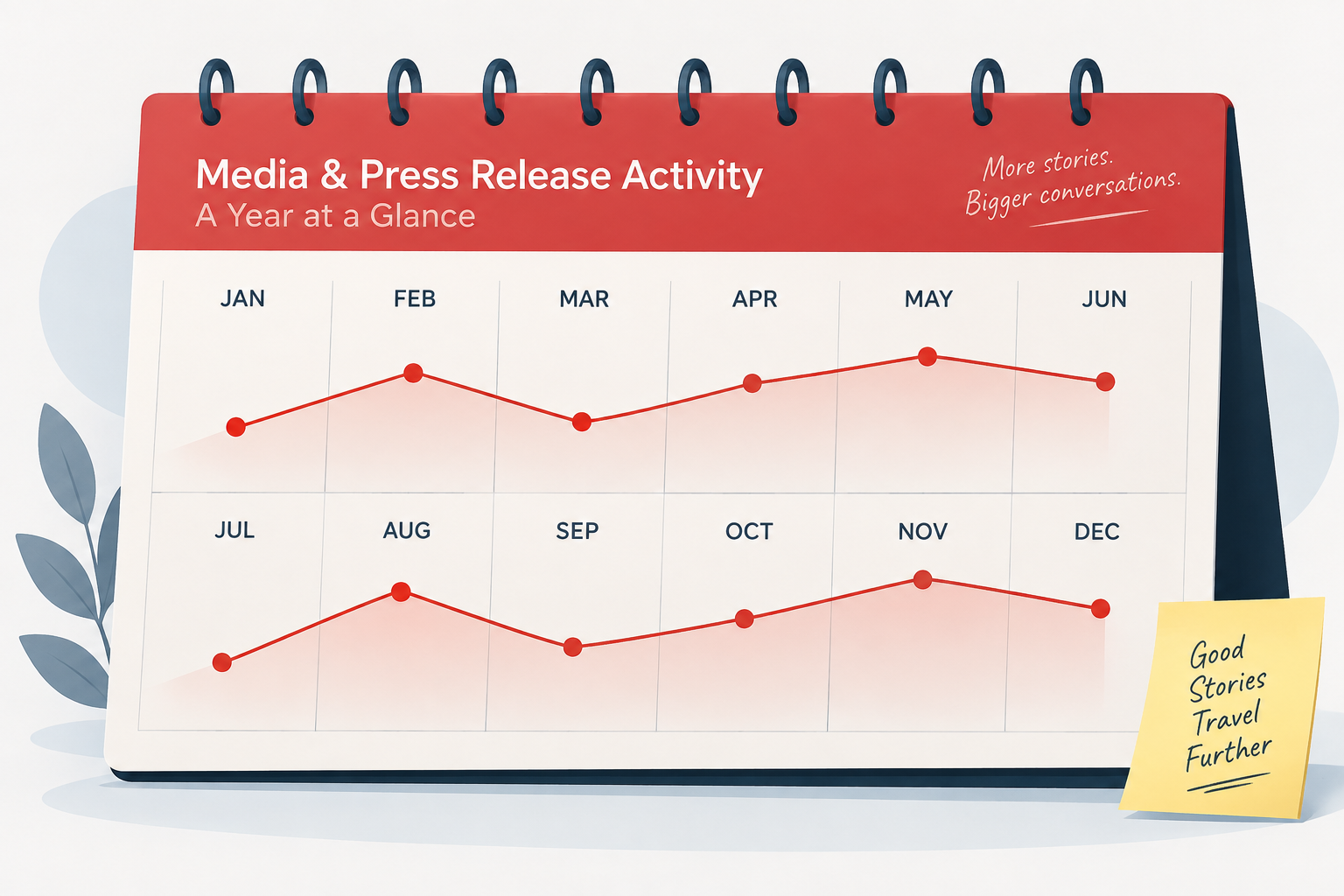
Malaysia’s communications calendar is influenced by the intersection of corporate activity, government announcements, business events and our many festive seasons.
January can begin strongly as companies announce plans for the year, business leaders offer outlooks and organisations introduce new strategies and initiatives. At the same time, Chinese New Year campaigns begin competing for attention. The period leading into Ramadan and Hari Raya creates another wave, as brands introduce festive campaigns, CSR programmes, promotions, seasonal products and community initiatives.
The middle of the year brings its own flow of corporate developments, conferences, awards, exhibitions and product launches. Then August and September introduce another distinctly Malaysian communications season. Merdeka and Malaysia Day create natural opportunities for stories around nation-building, entrepreneurship, innovation, community and Malaysian identity. Understandably, many organisations want to become part of these conversations.
Towards the final quarter, the business news cycle becomes busy again. Budget-related commentary, economic outlooks, industry events, corporate announcements and preparations for the following year begin competing for attention. By November and December, another familiar genre appears: the year in review. Companies want to talk about what they achieved, the milestones they reached and what they intend to do next.
There is nothing wrong with any of this. The challenge is volume.
Think of the media environment as a highway during rush hour. There is nothing wrong with your car and nothing wrong with the road. There are simply many vehicles trying to occupy the same space at the same time.
A company’s press release may be professionally written, the quotes carefully approved and the photographs ready, but it can still arrive in an editor’s inbox alongside numerous other announcements.
From the editor’s perspective, the questions are very different. Which story matters to the reader? Which development is genuinely new? Which announcement has wider implications? Which organisation has something interesting to contribute beyond announcing that something happened?
Ultimately, the question becomes: why should I publish this?
That question matters because one of the most common communications mistakes businesses make is confusing importance to the company with importance to the audience.
A new office may be a major milestone internally. A partnership may have taken months to negotiate. An award may represent years of hard work. A product launch may be the culmination of substantial investment. All these developments deserve to be communicated, but they do not automatically become compelling media stories simply because they are important to the organisation.
The stronger question is what the development means beyond the company itself.
Instead of merely announcing that a company has launched a new solution, perhaps the bigger story is about how Malaysian SMEs are changing the way they solve a particular business problem. Instead of simply announcing a strategic partnership, the story could explore how that partnership creates new opportunities for Malaysian businesses. Instead of celebrating a tenth anniversary through a conventional corporate release, the organisation could use ten years of experience to explain how its customers, market or industry have changed.
The company remains part of the story, but it is no longer the entire story. That distinction can determine whether a piece of communication feels primarily like corporate promotion or offers something useful to the wider media conversation.
Understanding when media traffic becomes heavier can help organisations make better communications decisions. If many companies are communicating around the same celebration, Budget announcement or industry event, a story naturally faces greater competition.
However, the solution is not necessarily to avoid busy periods. Sometimes those periods are precisely when an organisation should be visible. The challenge is to enter the conversation with something meaningful.
If everyone is commenting on the Budget, there may be limited value in issuing another statement simply saying that the company “welcomes the Budget”. Explain what a particular measure could mean for your industry, customers or SMEs.
If everyone is talking about artificial intelligence, avoid simply repeating that AI is transforming business. Show what is actually changing inside Malaysian companies. If sustainability is dominating the conversation, move beyond saying that ESG is important. Explain where businesses are struggling, what they misunderstand and what they can realistically do next.
This is the difference between adding to the noise and adding to the conversation.
Businesses should also reconsider treating the press release as the centre of their communications universe. A press release is a useful tool, but it is not, by itself, a communications strategy.
Some stories are naturally announcements, while others may be better developed as thought-leadership articles, interviews, case studies, founder stories, industry commentaries, opinion pieces, newsletters, videos or longer-form features.
One piece of corporate information can potentially become several communication assets when an organisation understands what it actually owns. A new factory, for example, is not merely a factory-opening announcement. Underneath it may be stories about investment, manufacturing capability, employment, technology, sustainability, supply-chain resilience or Malaysia’s position within a regional industry.
The real communications opportunity often sits underneath the announcement.
At WRComms, we look at this through three ideas: Identify, Define and Own.
First, identify what is genuinely interesting within the business—not simply what happened, but the knowledge, experience, perspective and insights behind it. Then define why that matters to an external audience. What problem does it explain? What trend does it reveal? What conversation can the organisation meaningfully contribute to? Finally, own that space consistently.
One pitch may not establish your presence, just as one press release may not build your reputation. Media visibility is rarely created through a single moment. It develops through consistency—by showing up with relevant perspectives, useful insights and stories that contribute something meaningful to the conversation.
Over time, this sustained presence can help journalists, stakeholders and audiences understand what an organisation stands for and the areas in which it has something credible to say. Instead of appearing only when there is something to announce, the organisation begins to participate in the conversations surrounding its industry.
That is when communication begins to move beyond publicity and becomes an asset that continues to build recognition, relevance and trust.
Quieter periods in the media calendar can be just as valuable as busy ones. Instead of waiting for the next launch or corporate milestone, businesses can use these periods to develop evergreen stories around their expertise.
A manufacturer can explain changes occurring within its supply chain. A technology company can demystify an emerging technology for SMEs. A financial services company can address common misconceptions among business owners. A second-generation entrepreneur can talk about succession. A company expanding overseas can share what Malaysian SMEs should understand before entering a new market.
These stories are not dependent on a single announcement or date. They provide greater flexibility for pitching, publishing and repurposing, while gradually helping an organisation develop something potentially more valuable than temporary publicity: a recognisable point of view.
This also creates a healthier communications rhythm. Instead of concentrating activity around a handful of launches and announcements, businesses can maintain a more consistent presence throughout the year.
Businesses may therefore benefit from thinking about the entire year as a communications landscape rather than a sequence of announcements.
Start with the predictable Malaysian calendar—festive periods, major industry events, Budget season, Merdeka and Malaysia Day and year-end. Layer the company’s own milestones over it, including launches, expansion plans, partnerships, research findings, anniversaries and leadership developments.
Then look carefully at the spaces between those events.
Those spaces can be filled with expertise, perspectives, case studies, observations and stories that support the organisation’s larger narrative. A quiet month does not necessarily mean there is nothing to communicate. It may simply require looking deeper into the business for the stories already there.
Once this happens, communications stops becoming a series of disconnected announcements. It becomes a continuous narrative in which each piece of content contributes to what the organisation wants to be known for.
Malaysia is certainly not short of stories, nor is it short of press releases. That is precisely why businesses need to become more deliberate about what they communicate, when they communicate it and why anyone outside the organisation should care. There will always be crowded periods. There will always be major events competing for attention. There will always be another announcement arriving in a journalist’s inbox.
A business cannot control the volume of the marketplace, but it can control the value of what it contributes to it. Before sending the next press release, perhaps there are three questions worth asking: Why now? Why does this matter? And why should someone outside our organisation care? When those answers are clear, the organisation is no longer simply issuing news. It is building a story that people can recognise, associate with the business and, over time, remember.
At WRComms, we believe content becomes more valuable when businesses stop treating communication as a series of announcements and start building it as an asset. Identify what is uniquely yours. Define why it matters. Then own the conversation.
The observations in this article are informed by publicly available and ambient information on media and press release patterns, together with WRComms’ own observations and experience of the Malaysian communications landscape. Media cycles are fluid and can vary considerably depending on industry, current events, festive periods, economic developments and the wider news agenda.
The patterns discussed should therefore be taken as general observations and directional guidance rather than definitive benchmarks or fixed rules on media behaviour, press release volumes or the best time to communicate. Businesses should consider their own objectives, audiences, industry context and the relevance of their story when determining when and how to communicate.

© 2026 Write Right Communications. All Rights Reserved.