



 June 2, 2026
  No Comments
 “Paris is a moveable feast.”
Many years ago, Ernest Hemingway wrote this about the city he once knew.
This Spring Festival, I found myself thinking—
perhaps life on the road, in a campervan, is much the same.
It does not stay. It does not settle.
And yet, in its constant movement, it carries encounters, reunions, and farewells.
Sometimes, it is these brief pauses that feel the most real.

Caption: My RV is dark green, a color that blends seamlessly with the surrounding natural environment.
I hadn’t seen my family for a year.
As the Spring Festival approached, we spoke over video call.
“Why don’t we meet in Yunnan?” they suggested.
Instantly, I pictured it—
them driving a campervan from my hometown in Guizhou, heading west toward Yunnan, where spring lingers all year round.
The idea took hold, and I didn’t hesitate.
“Let’s do it. I’ll meet you in Yunnan.”
So in February, while shopping malls in Malaysia were filled with red lanterns and familiar Chinese New Year songs, I boarded a flight to Yunnan.
What followed was far beyond anything I had imagined.
We agreed to meet on February 7.
From Kunming, I took a two-hour high-speed train to Yuanjiang, a small county in Yuxi. My family had settled in a campervan campsite near the Honghe River.

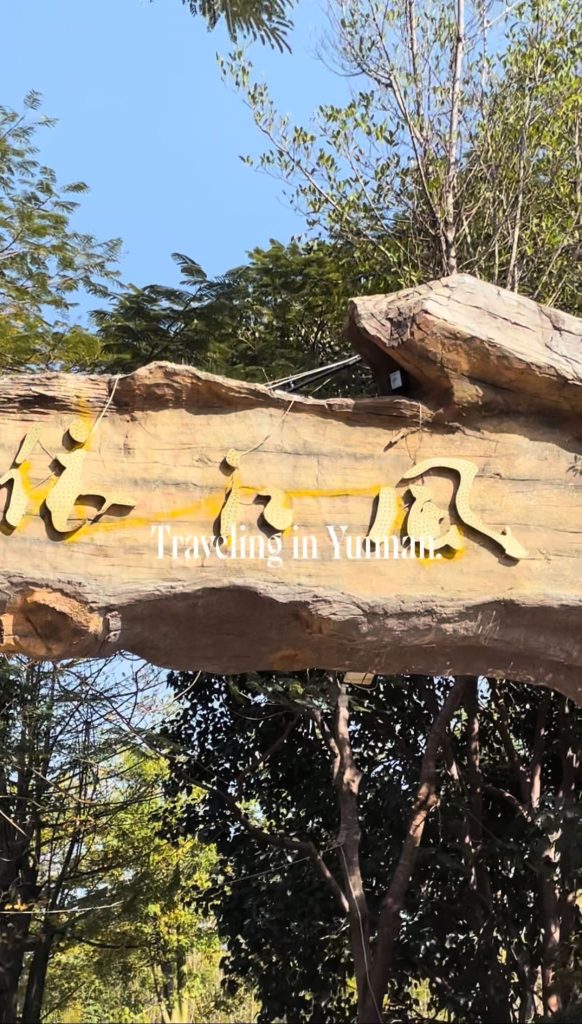
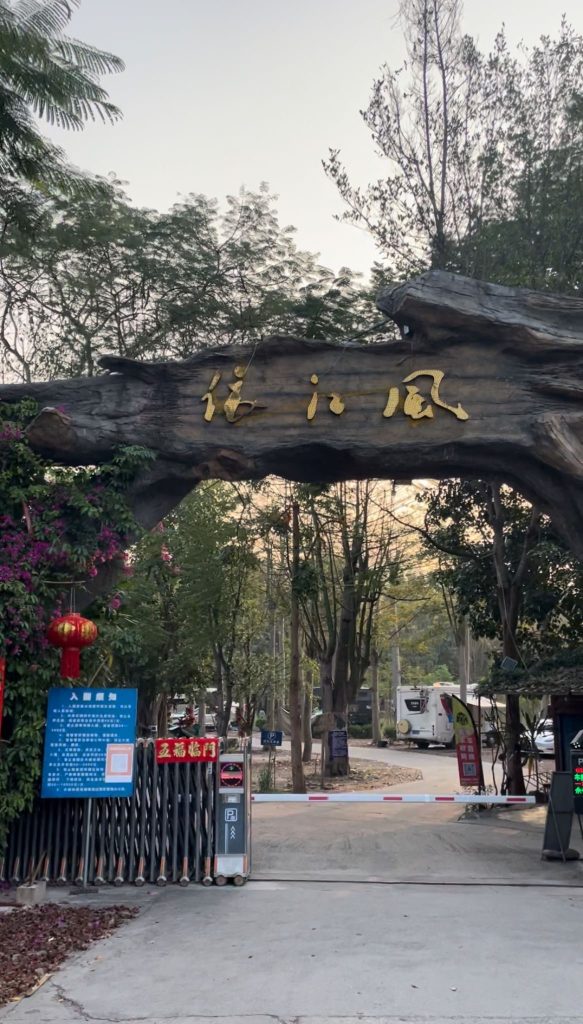
Caption: Yijiangfeng Manor in Yuanjiang offers an immersive stay that brings you into close contact with nature, embodying a lifestyle of “coexisting with the natural world.” Covering an area of over 33 hectares, the estate is home to more than 280 species of tropical plants, creating a rich ecological environment. It has been thoughtfully developed into an RV-friendly campsite, making it a landmark destination in Yuanjiang for the “self-driving + lifestyle travel” experience.
As the car entered the campsite, I saw vehicles from all over China lining the road—Beijing, Shandong, Henan. Many had traveled thousands of kilometers south, all for the same reason: to spend the New Year here.
Our spot was deep inside Zone G. I got off early and walked the rest of the way, pulling my suitcase behind me.
The sunlight in Yunnan was gentle, warm without being harsh. Some vans had red lanterns hanging outside; others had stacked firewood. One had arranged kapok flowers into the shape of “2026.”
The wheels of my suitcase rolled over the textured ground.
And suddenly, it hit me—I had come back, carrying with me a year’s worth of life from abroad.
My mother called to say she was coming to meet me.
I saw her in the distance, walking toward me—
at first just a silhouette, then slowly becoming someone I knew by heart.
We hugged.
My grandmother followed behind, walking more slowly.
In her hand was a small branch with red berries she had picked for me by the roadside.
A year had passed. Her hair was whiter, her frame thinner.
But she had still come to meet me.
The feeling was like the sunlight in Yunnan—
quiet, but certain.
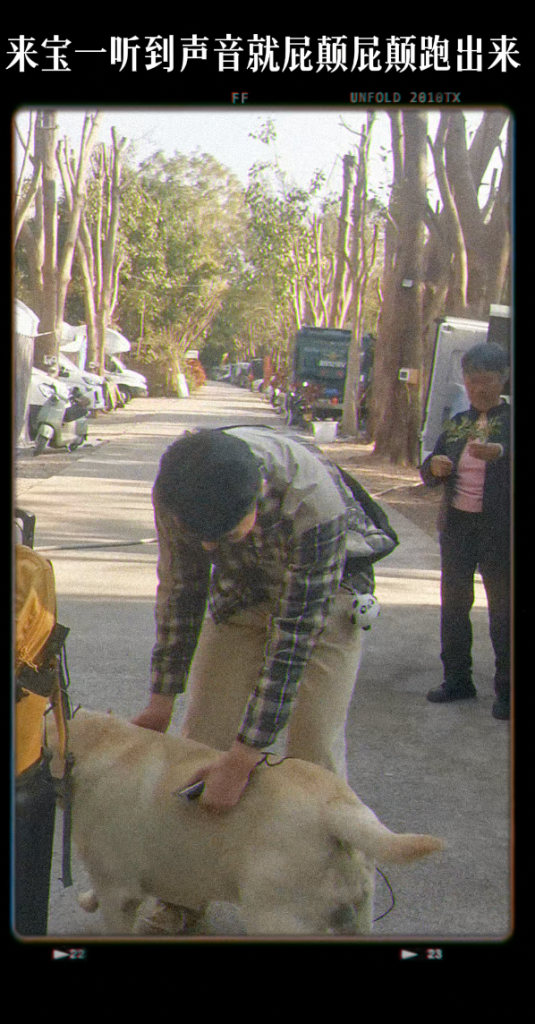
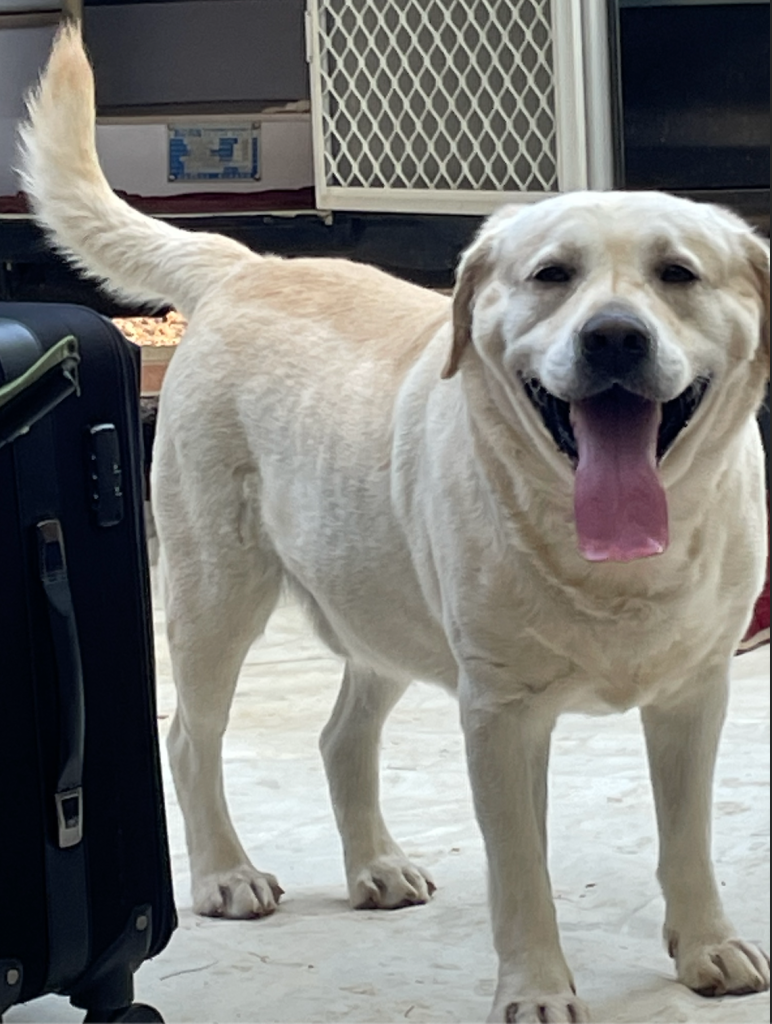
Caption: As soon as I arrived at the campsite, my Labrador, Laibao, ran out to greet me with boundless enthusiasm. His smile is always so warm and radiant—just like the blazing sun of Yunnan.
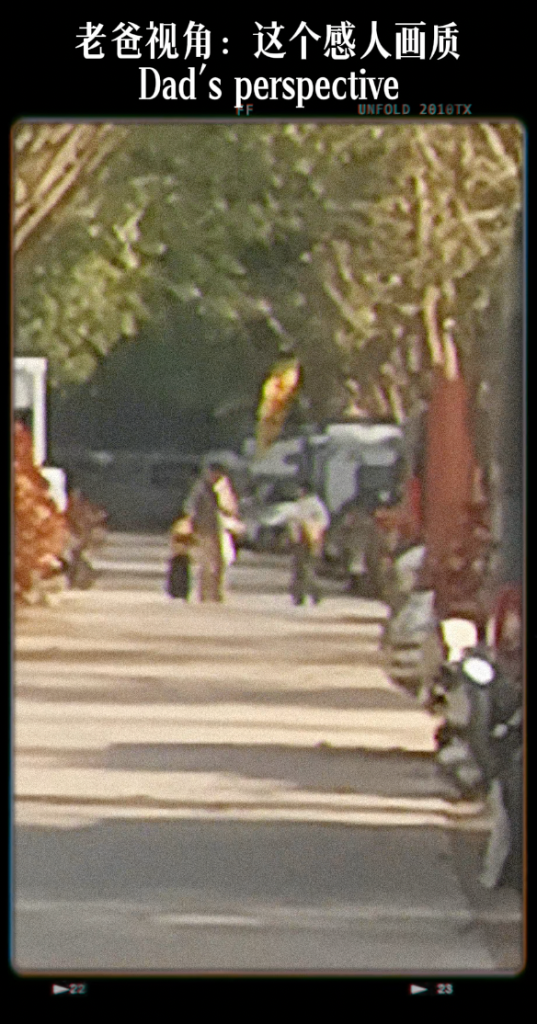
My father stood at the entrance of our makeshift “home,” filming the moment on his phone.
Our dog, Laibao, came running toward me, jumping up excitedly. I laughed and patted him, “You’ve gotten chubbier again.”
Our “home” was built from wooden poles, wrapped in plastic sheeting. At the front was the “kitchen”—a camping stove, red storage boxes, neatly arranged utensils. Further in were the tent and a small tea area.
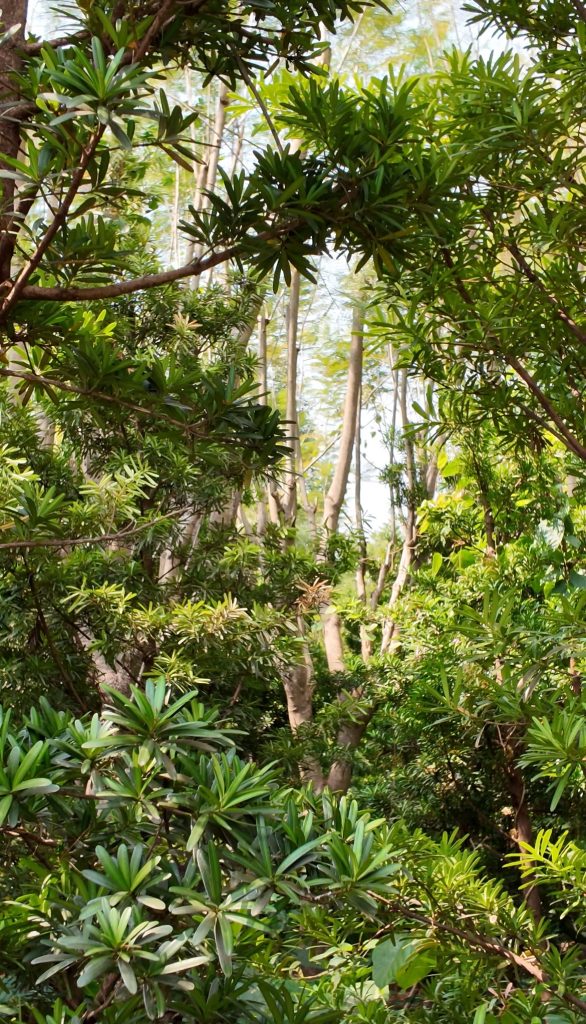
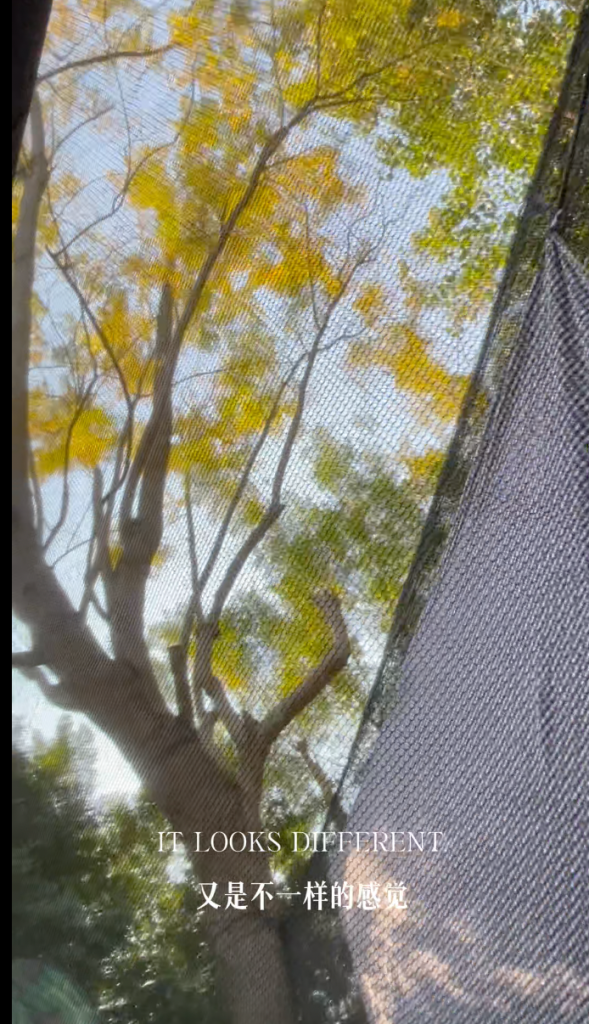
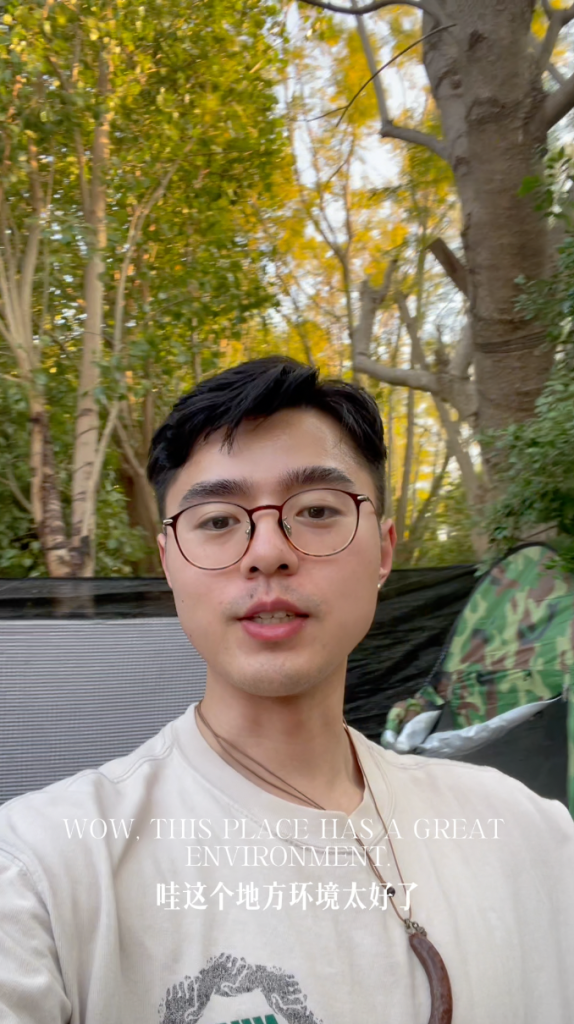
Caption: Behind where my RV is parked, it lies a natural and tranquil landscape, where lush green and golden trees stretch as far as the eye can see.
My mother told me to lie down in the tent and rest.
I did—and above me, a golden leaf swayed gently in the air.
“This place is beautiful,” I said.
That night, my father cooked while my mother prepared the ingredients.
Tomato and scrambled eggs, stir-fried arrowhead with pork—familiar dishes filled the table.
The moment I took my first bite, I knew—
I was home.

Caption: My Dad fried a lot of his Chinese specialty dishes to welcome my coming-back: there are Fried Eggs with Tomatoes, Fried Chinese Arrors-head with Pork Tendons, Fried Shredded Carrots, Green Pepper Stir-fried with Potato Shreds and Boiled White Carrot with Guizhou Dipping Sauce.
Life at the campsite felt simple, almost elemental.
Mountains behind us, water nearby. Fields stretched beyond the campsite, while greenery filled its interior. A long path ran to the left of our “home,” often covered with fallen leaves that crunched softly underfoot.

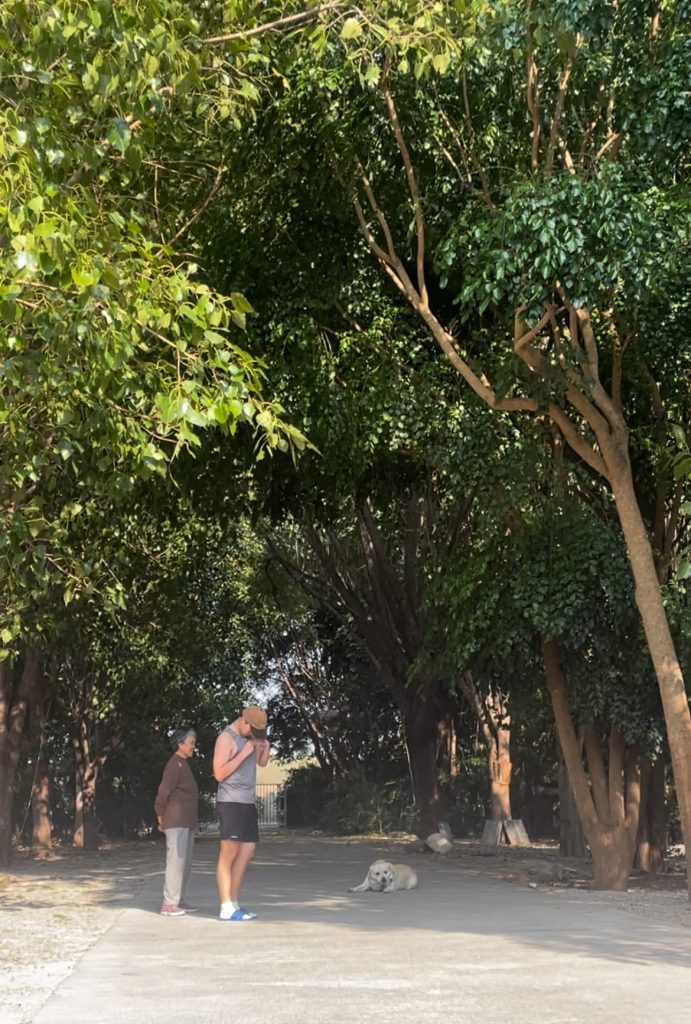
Caption: Right outside where the RV is parked, there’s a shaded path lined with tall trees on both sides. Every now and then, leaves drift gently down. My grandmother, my dog, and I often take walks along this peaceful trail.
Some evenings, my grandmother and I would sweep the road together using brooms made of dried branches. By the time we finished, the leaves would already be falling again.
Like time itself.
On the first night, my father and I slept in the tent. Though the days were warm, the nights were damp and cold. Moisture seeped into the blankets, creeping from my feet up to my back.
The next day, I asked him, “Don’t you feel how damp it is?”
He shrugged. “Not really. I’m used to it.”
I admired his resilience—but also realized I wasn’t used to it anymore. The next night, I moved into the campervan.
From then on, my parents stayed in the tent, while my grandmother and I slept in the van.
She went to bed early, around ten. The nights were quiet—no city lights, no noise—just the stars overhead.
Sleep came easily.
In the mornings, I woke naturally. The sunlight was just right. Stepping outside, the fresh air filled my lungs, clearing my mind.
Breakfast was always ready—eggs, milk, dumplings, sometimes a steaming bowl of beef noodles.
One morning, I went for a run.
The path was almost empty. The air was crisp, birds calling in the distance. I counted my breaths as I ran, following a gravel road uphill.
In the distance, mountains emerged through the morning mist. The sun rose slowly, warming my face. Kapok flowers lay scattered along the roadside.
Afterward, I returned, showered, and sat quietly in the van to meditate.
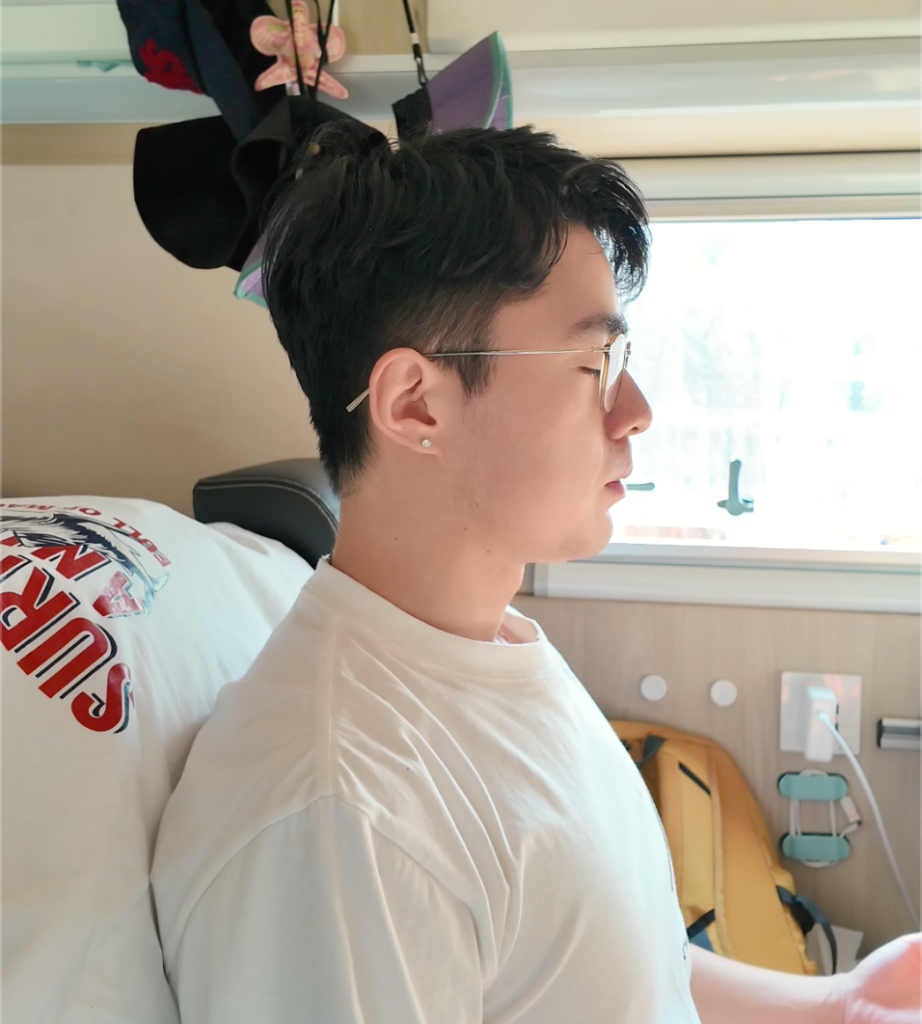
Caption: I would usually do a mediation in the morning, feeling the peace and silence from the bottom of the heart.
“Close your eyes. Take three deep breaths…”
For a while, nothing interrupted me.
A few days later, we met a fellow traveler.
He had ridden a motorcycle all the way from Guiyang and set up a blue tent across from us. His surname was Tian—I called him Brother Tian.
At first, it was my grandmother who spoke with him. Later, when my father was hospitalized for kidney stones, my mother rode on his motorcycle to visit him.
By the time my father returned, I finally met him.
He was slightly stocky, with an easy, honest smile.
We invited him to eat with us. At first, he declined politely, but eventually he joined us every day.

Brother Tian would take me on his motorcycle, riding through the entire city with me on the back, as we soaked in the laid-back, unhurried charm of this small town.
Sometimes over lunch, he would say, “Want to go for a ride later?”
I would hop onto the back of his motorcycle. We rode along the river, the wind loud in our ears, our conversations freer than usual.
He told me about his past in construction, how he had quit his job and now lived a quieter, solitary life.
We rode from fields to hills. Tall kapok trees stood along the road, their red blossoms like flames. Occasionally, a dog would rush out barking, and we would speed away laughing.
Sometimes he took me into town—to buy coffee, to run errands, or simply to wander.
Once, he brought me to a historical park with pavilions and a lotus pond. He spoke animatedly about history, recounting stories of generals and battles as if they had just happened.
On the way back, it was always either sunset or nightfall.
Each time I returned, my father would ask, “Back already?”
And I would answer excitedly, “We went to this place, and that place…”
That sense of ease—I hadn’t felt it in a long time.
There was also a couple from Northeast China, both in their sixties. We invited them to join us for New Year’s Eve dinner.
Before the festival, we went to the local market. It was lively, full of smoke, voices, and color. We bought meat, vegetables, and dried bamboo shoots from an elderly woman who didn’t use a smartphone—we had to transfer money to a neighboring vendor to give her cash.
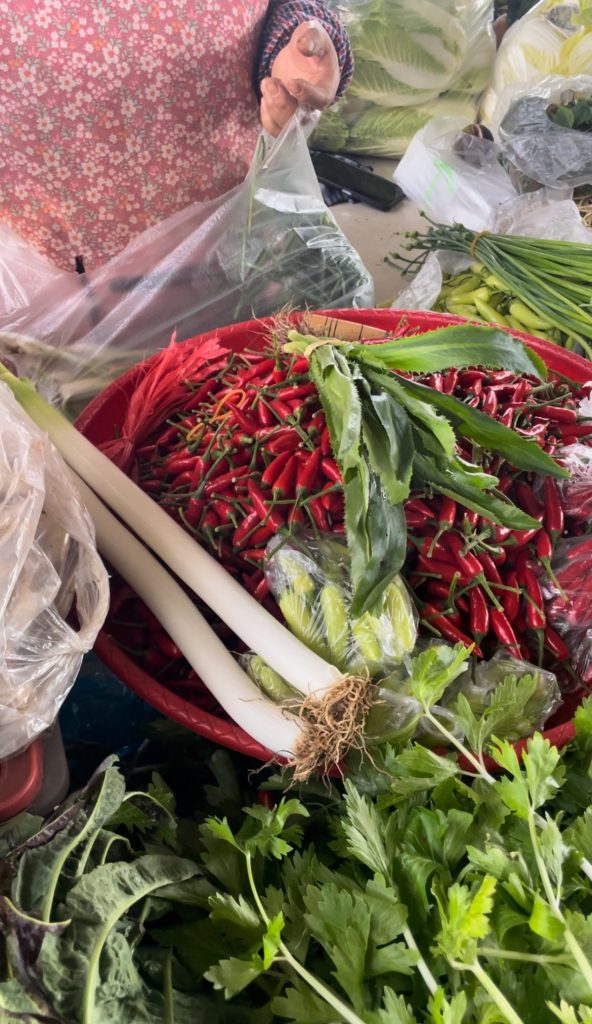


Caption: I would go to the market with my grandma and my mother to buy food. The market is huge, and they would bargain with the farmers—an experience full of warmth, human connection, and the vibrant, down-to-earth energy of everyday life.
On New Year’s Eve, we decorated our “home”—red couplets on the door, ribbons on the trees.
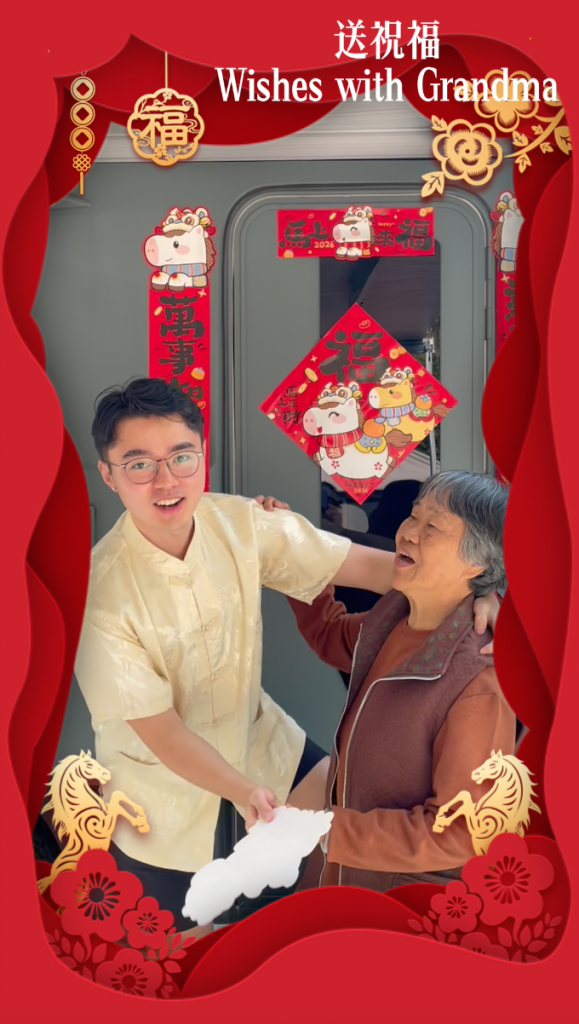

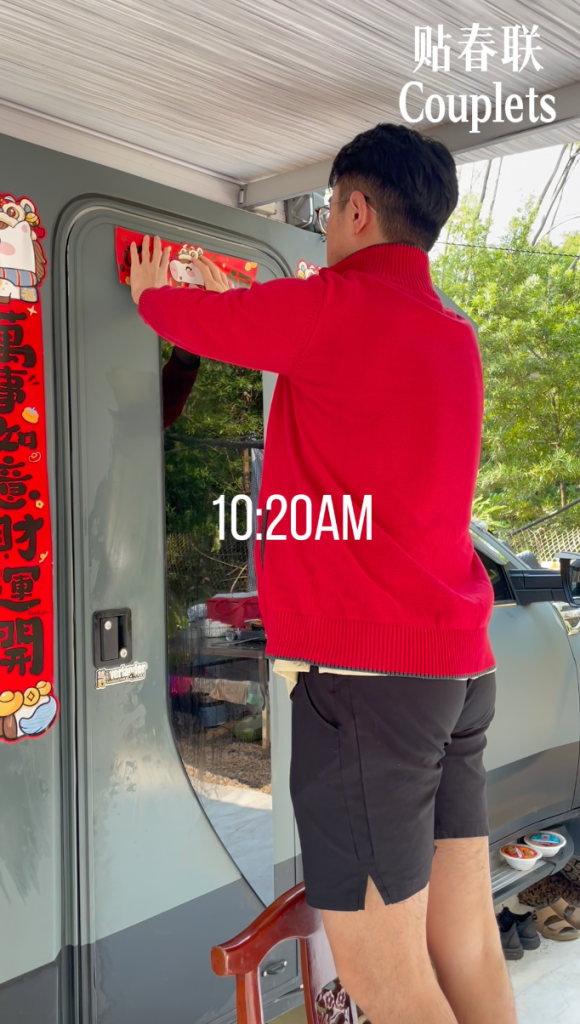
Caption: On the eve of the Spring Festival, I decorated our “home” with my family—hanging couplets, red decorations, and other little festive touches. Later, I even danced with my grandma right in front of our RV door.
By five in the evening, the couple arrived, carrying dishes they had prepared—braised chicken with mushrooms, along with other home-cooked food.
Soon, the table was full.
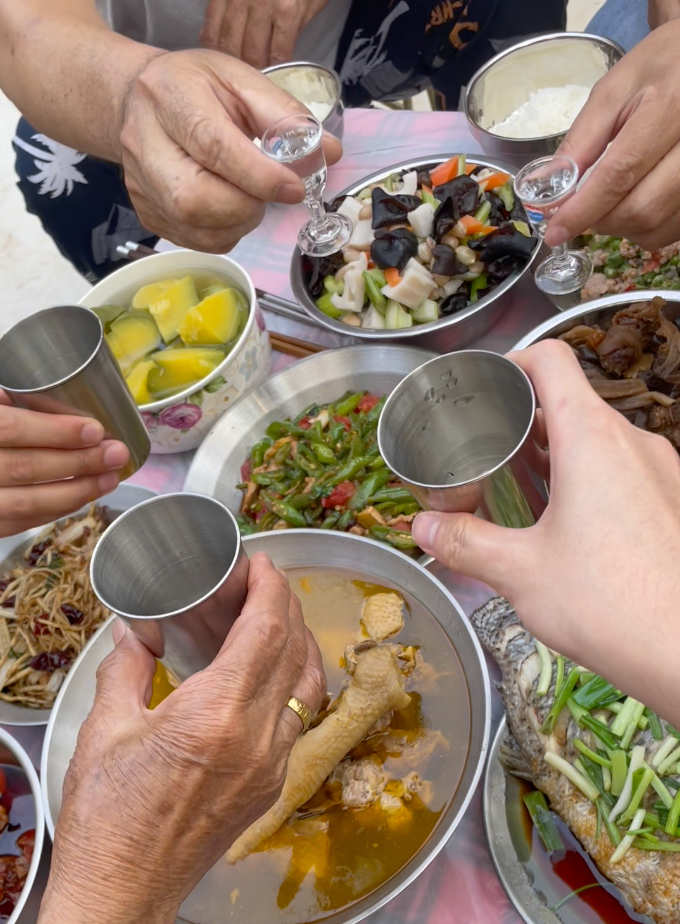
I brought out a bottle of Maotai from Guizhou.


Caption: We raised a toast with Moutai and began our New Year’s Eve dinner. In China, it’s a cherished tradition to watch the Spring Festival Gala broadcast by CCTV (China Central Television) after dinner, an essential part of the celebration that brings everyone together.
At half past five, we raised our glasses: “Happy New Year.”
Later, we watched the Spring Festival Gala on an iPad. As the night grew colder, my grandmother and I shared a blanket, eating sunflower seeds and watching the performances.
Around ten, the Northeastern aunt brought over freshly made dumplings—sauerkraut filling, celery filling—steaming hot.
Near midnight, we set off fireworks.
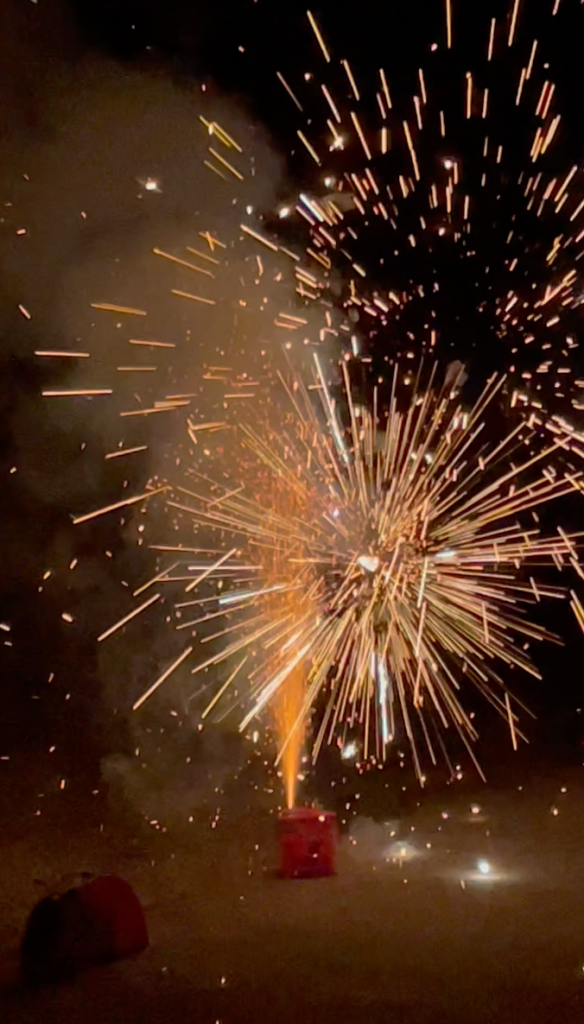
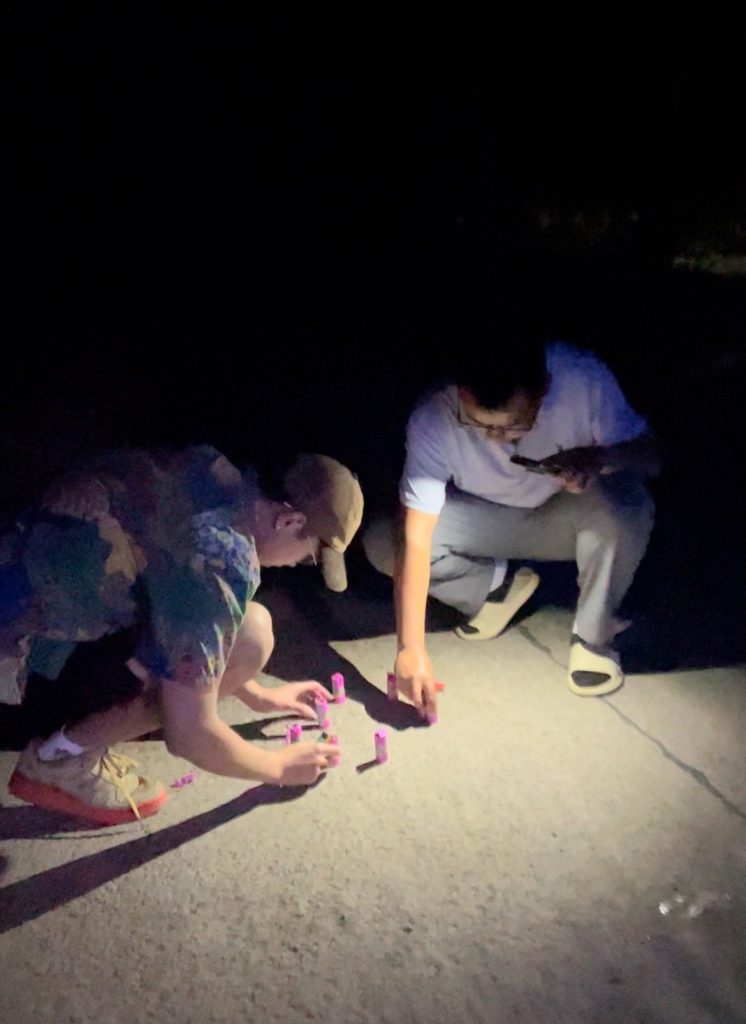

Caption: As midnight approached, we went outside to set off fireworks. Brother Tian and I lit eight ground fireworks together, then quickly ran off after igniting them. Meanwhile, the children covered their ears with both hands—the whole scene felt so vivid and full of life.
They burst into the sky like scattered stars. In the distance, the entire town lit up—fireworks rising, firecrackers echoing.
In that moment, I felt—
this was what the New Year was meant to be.
A week later, the campsite grew quiet.
One by one, the vehicles left. The laughter of children faded. The fireworks stopped.
The night before Brother Tian left, my mother packed him a bag full of food for the road.
The next day, he strapped his belongings to the back of his motorcycle and put on his helmet.
“Take care,” I said. “We’ll meet again.”
He didn’t say much—just nodded.
Soon after, the Northeastern couple also left. We said goodbye in the early morning, warmly but briefly—because we didn’t know if we would ever meet again.
Life in a campervan made me rethink what “home” means.
Does home have to be fixed?
Does it belong only to family?
Perhaps not.
In that stretch of time, a small town, a campsite, a group of strangers, and my family all intertwined.
Strangers became people we shared meals with.
Brief encounters felt as real as family.
In Chinese culture, water is fluid, yielding, yet powerful.
If home could be like water—
then it would have no boundaries.
It could exist in a campervan, in a campsite, in a fleeting encounter.
People come and go. Landscapes change.
But some things remain—
Love, and the ability to feel life deeply.
And perhaps, it is in this constant flow
that we come to recognize our own existence.
— End —


© 2026 Write Right Communications. All Rights Reserved.