



 July 1, 2026
  No Comments
 By Aileen Anthony, Founder WRComms | Executive Editor MALAYSIA SME
I’ve attended countless corporate events, conferences, launches and forums over the years. One thing continues to puzzle me. Organisers meticulously plan every detail—the venue, lighting, stage design, guest experience, branding, speeches and catering. But when it comes to accommodating the media, it often feels like an afterthought.
Yes, we’re usually given front-row seats, and we’re genuinely grateful for that. But a front-row chair isn’t necessarily a workstation. More often than not, I’m perched on the edge of my seat trying to balance a laptop, voice recorder, notebook, mobile phone and camera—all while taking notes, capturing quotes and trying not to spill my coffee.
A proper workspace doesn’t have to be elaborate.
Just give us a table.
At the very least, we’ll have somewhere to put our coffee cups.
Setting aside a dedicated media table at the front, either on the left or right side of the hall, can make an enormous difference. It gives journalists enough room to type, organise their equipment, charge devices and work comfortably without disturbing other guests.
Reliable internet connectivity is equally important. News today moves at incredible speed. Many journalists are writing their stories while the event is still taking place. Editors are waiting. Social media teams are publishing live updates. News portals are uploading stories within minutes.
When organisers provide stable Wi-Fi, they aren’t just offering convenience, they’re helping their own event gain faster visibility.
This is the one that genuinely baffles me.
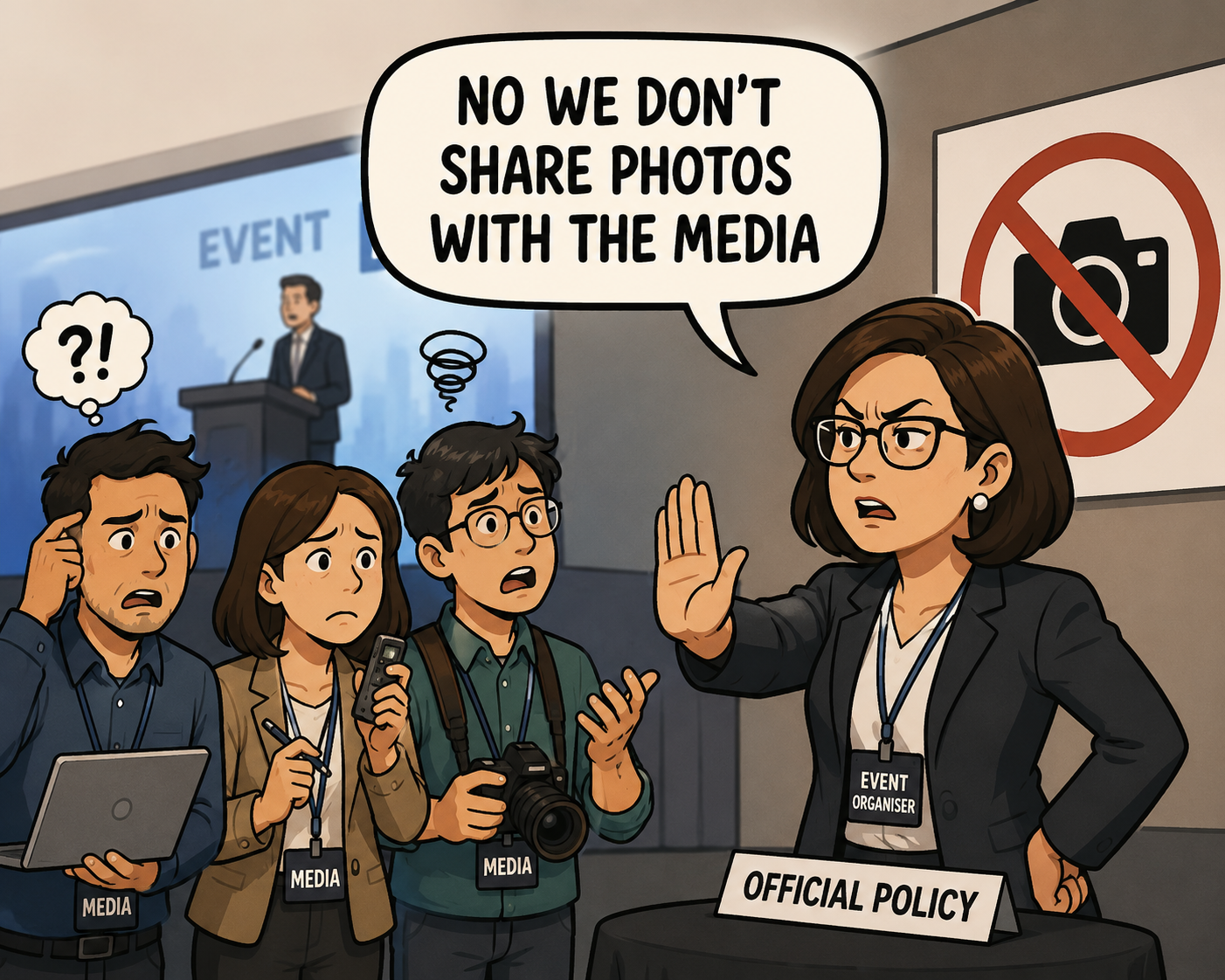
Many events hire professional photographers to capture the day. Yet some organisers tell the media:
“Sorry, we don’t share photos.”
Why?
Journalists aren’t asking for heavily edited or retouched images. We simply need clean, high-resolution photographs that accurately document the event. Even better if they’re uploaded during the event rather than several days later, when the news cycle has already moved on.
The most useful photo folders that journalist can access in real-time as the event happens include:
That last point is especially important. Correctly labelled images save journalists valuable time and reduce the likelihood of spelling mistakes or misidentification.
Today’s mainstream media no longer works to a single deadline. A story may appear on a news portal within minutes, followed by social media posts, short videos, newsletters and print editions. Every minute counts.
When journalists spend unnecessary time searching for photographs, identifying speakers or trying to find stable internet access, it delays publication.
Ironically, the organisation that invested so much into hosting the event ends up slowing down its own publicity.
Inviting the media isn’t simply about filling a row of reserved seats. It’s about building an environment where journalists can work efficiently. If organisers truly want to maximise the return on their event investment, supporting the media should be part of the event planning checklist.
Simple Ways to Help the Media
- Provide a dedicated media table near the front of the venue.
- Ensure reliable Wi-Fi or internet connectivity.
- Make power points accessible where possible.
- Upload official photographs during the event.
- Label photographs clearly with names and titles.
- Share media resources through a QR code or download link.
- Designate a media liaison who can answer quick questions.
The media isn’t there simply to observe. We’re there to help your story reach people who couldn’t be in the room. The easier you make it for journalists to do their job, the faster your event reaches thousands, sometimes millions, of people.
Don’t just invite the media. Work with US.

© 2026 Write Right Communications. All Rights Reserved.