



 July 17, 2026
  No Comments
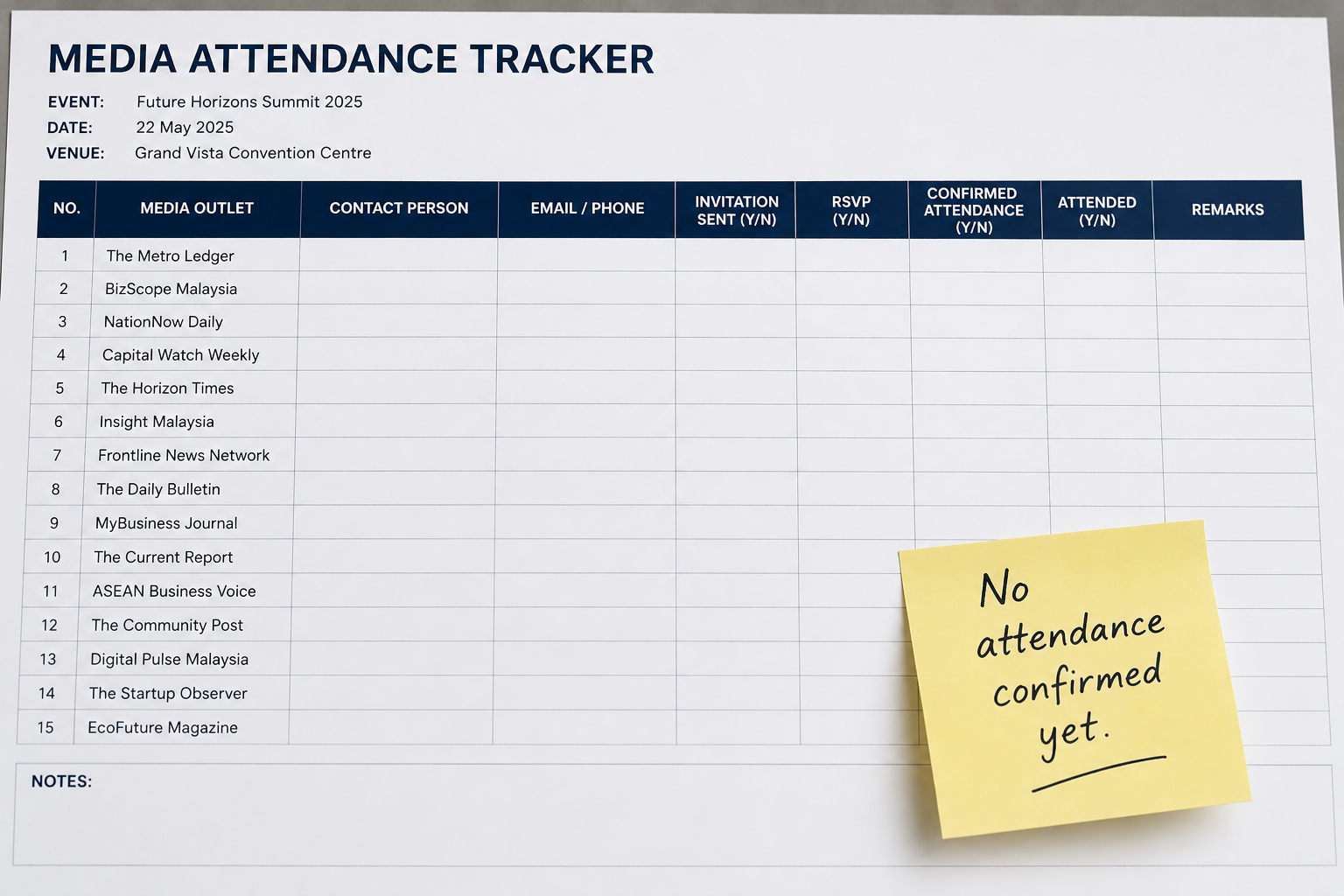
If you have worked in communications long enough, this situation will probably feel very familiar. It is the week leading up to a major event and management begins asking for daily updates on media confirmations. The attendance tracker is circulated, but many of the boxes remain empty.
The communications team starts making more phone calls, sending more WhatsApp messages and following up on invitations that have already been sent. When the event concludes, another request usually follows. This time, it is to explain why the media did not attend.
Many communications professionals have experienced this cycle repeatedly. It can be frustrating because the assumption is often that media attendance is entirely within the control of the communications team. The reality is far more complex. Before asking why journalists did not attend, leaders may find it more useful to understand the environment in which today’s media organisations operate.
The media industry has changed significantly over the past decade. Many news organisations are operating with much smaller editorial teams than they once had. Journalists who previously focused on one publication or one platform are now expected to produce stories for print, digital platforms, social media and video channels.
Many are required to report, photograph, film, edit and publish content within the same day. Although invitations continue to arrive in large numbers, the number of journalists available to attend those events has steadily declined. At the same time, the volume of news competing for attention has increased substantially.
Government announcements, policy developments, corporate launches, business forums, community programmes, political events and breaking news all compete for limited editorial resources. Even when a journalist would like to attend an event, editors may assign them elsewhere because another story carries greater public interest or urgency. Decisions are often influenced by competing priorities rather than the quality of the event itself.
Commercial realities have also become part of the equation. Media organisations are businesses that must balance editorial responsibilities with financial sustainability. Declining advertising revenues and changes in media consumption have placed increasing pressure on newsrooms.
Publications naturally invest more time in maintaining relationships with organisations that consistently support them through advertising or long-term commercial partnerships. This does not mean editorial coverage can be purchased, but it does mean that when resources are limited, commercial considerations may influence how editorial resources are allocated.
Another factor that organisations sometimes overlook is the difference between organisational importance and newsworthiness. An event may represent months of preparation, mark a significant milestone or hold great meaning for employees and stakeholders.
However, journalists evaluate stories through a different lens. They consider whether the story is new, whether it affects a wider audience, whether it is timely and whether it contributes something meaningful to the public conversation. Internal significance does not automatically translate into editorial value.
The format of many corporate events has also become less attractive from a newsroom perspective. If a journalist believes that the essential information can be obtained from a press release, official photographs or recorded speeches after the event, attending in person may not be the best use of increasingly limited time.
Physical attendance is now reserved for stories that offer exclusive interviews, unique visuals, breaking developments or opportunities that cannot be replicated remotely.
Relationships with journalists continue to matter, but relationships alone are no longer enough to guarantee attendance. A trusted relationship may encourage a journalist to consider an invitation, yet it cannot overcome editorial priorities, staffing limitations or breaking news.
Technology has also transformed how organisations communicate with their stakeholders. Many companies now reach audiences directly through LinkedIn, YouTube, Facebook, Instagram, email newsletters and their own websites. Media relations remains an important pillar of communications, but it is no longer the only avenue through which organisations build credibility and visibility.
Success should therefore be measured not only by the number of journalists seated in the room, but also by whether the intended audience ultimately received and engaged with the message.
This changing landscape calls for a change in the questions leaders ask their communications teams. Instead of focusing solely on the number of confirmed media attendees, leaders can ask whether the story is genuinely newsworthy, whether the messaging is relevant to current issues, whether supporting materials make the journalist’s work easier and whether the organisation has a broader communications strategy that extends beyond traditional media coverage. These questions encourage stronger planning and place greater emphasis on creating stories that deserve attention rather than simply expecting attendance.
Communications professionals cannot control newsroom staffing levels, editorial priorities or breaking news. They cannot compel journalists to attend an event or guarantee that every invitation will result in coverage. Their responsibility is to identify compelling stories, develop meaningful relationships with the media, prepare quality content and ensure that every communication opportunity is maximised. When those responsibilities have been fulfilled, the absence of media attendance should not automatically be viewed as a failure.
The next time an event approaches and the attendance tracker appears less than encouraging, perhaps the conversation should shift away from asking how many journalists have confirmed and towards asking whether the organisation has created a story that genuinely deserves attention.
That change in perspective reflects a better understanding of today’s communications landscape and offers communications teams something they often need most from leadership, which is trust.

© 2026 Write Right Communications. All Rights Reserved.