



 July 27, 2026
  No Comments
The past two weeks explored two realities of media relations. The first is that journalists do not always attend events because of factors that are often beyond the control of communications teams. The second is that niche media may be the better choice when an organisation wants to reach a specific industry or stakeholder group.
This naturally leads to another question.
When should organisations pursue mainstream media?
The answer is surprisingly straightforward. Mainstream media is most valuable when the story affects the lives of a broad cross section of Malaysians. Editors of national newspapers, television stations and large digital news platforms are responsible for informing the public about issues that carry widespread relevance. They are not simply looking for corporate announcements. They are looking for stories that matter to society.
Many organisations frame their announcements around what they have achieved. They announce a new partnership, a product launch, an expansion or an award. While these milestones are important to the organisation, they may not automatically be important to the wider public.
Mainstream media is more likely to pay attention when the story extends beyond the organisation itself.
Food security is one example. A company developing technology that helps farmers increase crop yields is not simply launching a new product. It is contributing to national food resilience, agricultural productivity, and consumer affordability. Likewise, innovations in healthcare, education, energy, cybersecurity or public safety often carry implications that extend beyond individual businesses.
The wider the societal impact, the stronger the case for mainstream coverage.
When organisations believe their story deserves national attention, many assume that distributing a press release will be sufficient. Unfortunately, that is rarely how newsroom decisions are made.
Editors receive hundreds of press releases every week. Most contain announcements that organisations believe are important, but few explain why the story matters to the general public at that particular moment.
A stronger approach is to develop a media pitch rather than simply distribute a press release.
A media pitch answers the questions that editors are already asking. Why is this relevant today? Why should readers care? What problem does it solve? What evidence supports the claims? Why is this different from similar announcements?
Instead of asking journalists to publish an announcement, a good pitch offers them a story.
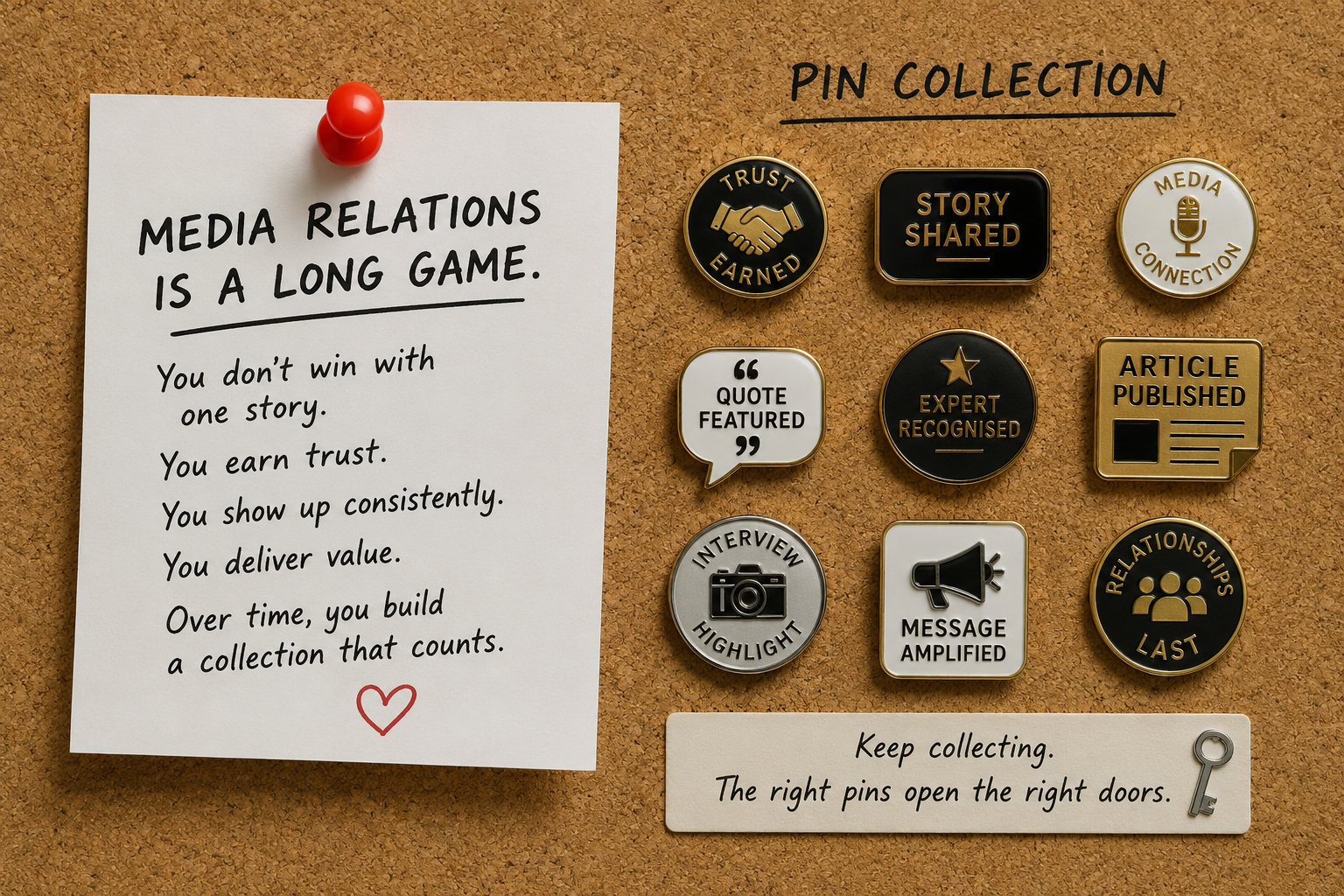
One of the biggest misconceptions in media relations is that a single announcement can establish an organisation as a credible voice.
Most journalists do not build confidence in an organisation after receiving one press release. Confidence develops through repeated interactions, consistent quality and reliable information over time.
Organisations that appear only when they have something to promote often struggle to gain editorial attention. In contrast, organisations that regularly contribute useful insights, respond to industry developments and make knowledgeable spokespeople available gradually become recognised sources.
This process resembles relationship building more than marketing.
Research in psychology has long demonstrated the mere exposure effect, first described by psychologist Robert Zajonc. The principle suggests that repeated exposure to something generally increases familiarity and positive perception, provided the experiences remain relevant and credible.
Media relations works in much the same way.
An organisation does not become recognised because it sends one excellent press release. Recognition develops through consistent, meaningful engagement. Sharing useful commentary once a month, offering expert perspectives on emerging issues and maintaining regular contact with journalists helps establish familiarity without overwhelming the newsroom.
As familiarity grows, journalists become more confident about approaching the organisation for comments, interviews or background information. Over time, the organisation shifts from being another name in an inbox to becoming a trusted source.
The most effective organisations rarely contact the media only when they want publicity. They contribute to ongoing conversations within their industries. They provide timely perspectives when news breaks. They share data, explain trends and make complex issues easier to understand.
This consistency creates value for journalists because it helps them produce stronger stories. It also creates value for organisations because trust is built before the next major announcement arrives.
When an important development eventually occurs, the relationship already exists.
Many organisations evaluate media relations campaign by campaign. They expect immediate coverage after each announcement and become disappointed when results fall short.
Mainstream media rarely works that way.
Editorial trust is accumulated over months and years rather than days. Credibility is established through repeated demonstrations of expertise, relevance and reliability. Every interaction contributes to that reputation, whether it results in immediate coverage or not.
The next time your organisation believes it has a story worthy of national attention, ask a different question. Instead of asking whether the press release is ready, ask whether the organisation has consistently earned the attention it hopes to receive.
Media relations is not built on a single announcement. It is built on a steady stream of credible stories, thoughtful insights and meaningful relationships. When organisations understand that, mainstream media becomes less about chasing headlines and more about becoming a trusted voice that journalists know they can rely on.

© 2026 Write Right Communications. All Rights Reserved.