



 June 30, 2026
  No Comments
 Every organisation invests significantly in communications and marketing. Forums, conferences, networking sessions and stakeholder engagements require considerable resources. Beyond the venue, speakers and programme, there are countless hours spent planning the itinerary, coordinating logistics, inviting guests and creating an experience that reflects the organisation’s aspirations. These investments often run into thousands, yet many of them reach an abrupt conclusion the moment the emcee announces that the event has come to an end.
The question is whether we are extracting value that is commensurate with the investment made.
Most organisations produce a press release, share a collection of photographs and perhaps publish a highlight video. While these are important, they often capture only the fact that the event happened. They seldom capture the wealth of knowledge that was exchanged or continue the conversations that were started.
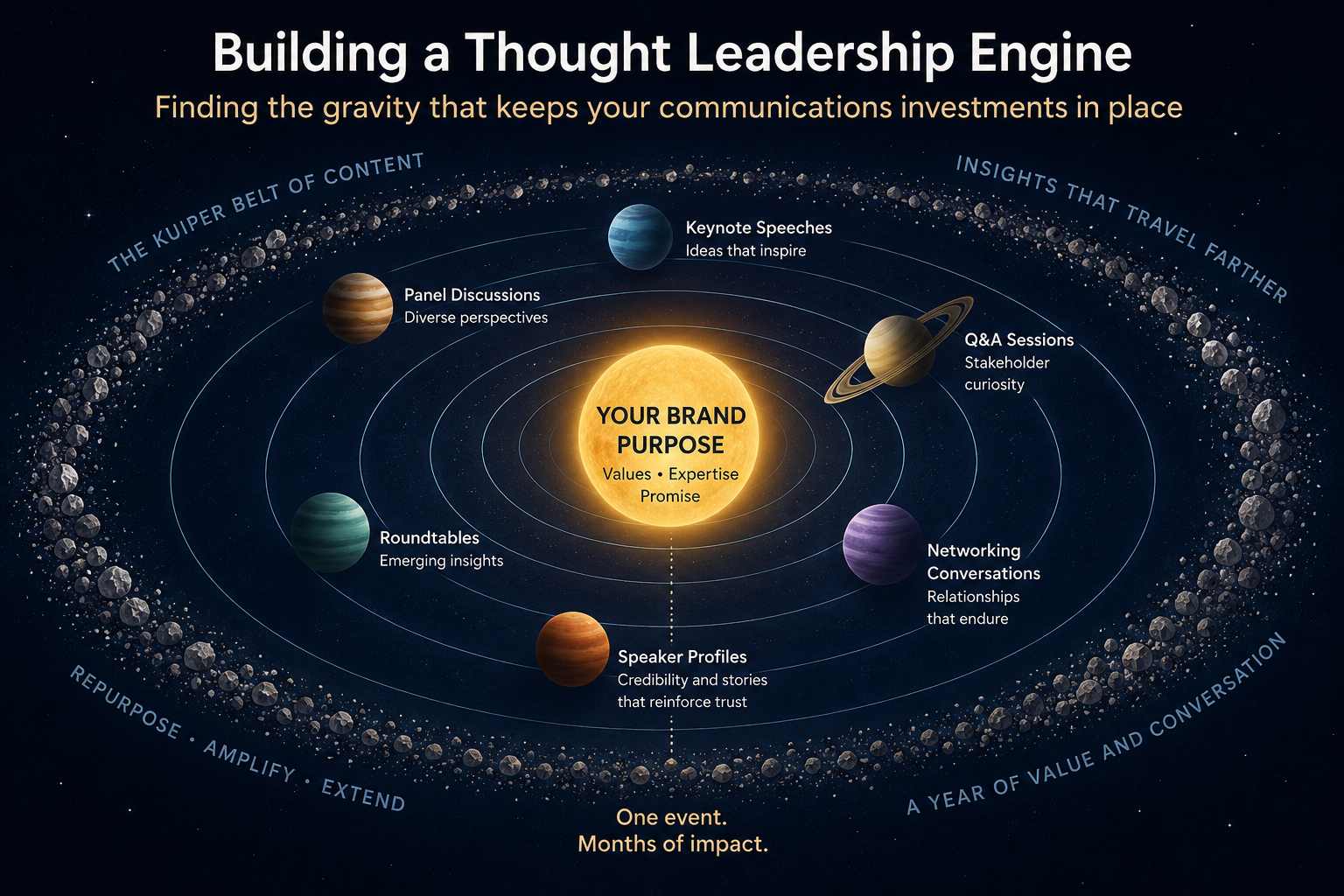
Every conference and forum generates intellectual capital. Each panel discussion brings together diverse perspectives that can be developed into insightful articles. Every keynote speech contains ideas, stories and practical lessons that can be transformed into e playbooks or educational resources. The questions raised during Q&A sessions reveal what stakeholders genuinely want to know, while roundtable discussions often uncover emerging issues and opportunities that deserve deeper exploration.
Even the people you invite contribute to your thought leadership. The experiences, expertise and credibility of your moderators, speakers and panellists tell a story about the company you are building and the conversations you choose to lead. Their journeys, ideas and perspectives can become a series of features that collectively reinforce your organisation’s purpose, values and expertise.
This is where organisations need to rethink the role of communications. Rather than viewing every event as a standalone activity, it should become part of a larger thought leadership engine that continuously strengthens the organisation’s reputation.
The objective should not simply be to promote an event. It should be to create a body of knowledge that continues serving stakeholders long after the event has ended.
- A single conference can provide enough material to populate blogs, newsletters, LinkedIn articles and knowledge resources throughout the following year.
- One panel session may become several feature articles.
- A keynote speech can evolve into a practical guide.
- Audience questions can inspire educational content.
- Roundtable discussions may develop into industry insights or opinion pieces.
Over time, these individual pieces begin to reinforce one another. Instead of isolated campaigns, they form a consistent body of work that helps stakeholders understand who you are, what you stand for and why your organisation’s voice deserves attention. This is the gravity that keeps every communication and marketing investment aligned with the larger purpose of building trust and strengthening reputation.
Thought leadership is rarely about creating more content. It is about recognising the value that already exists within your organisation and learning how to harness it creatively. The greatest return on an event is not measured by attendance alone, but by how effectively its insights continue to educate, influence and inspire long after the venue has emptied.
At WRComms, we believe every conference and forum should leave behind more than memories. It should create an enduring library of ideas that continues to engage stakeholders, support business development and reinforce your brand promise for months to come.
We would be happy to have a conversation about how to turn your next event into the starting point of a year long thought leadership programme.
You may also be interested in:

© 2026 Write Right Communications. All Rights Reserved.