



 July 1, 2026
  No Comments
 Securing a renowned keynote speaker is often one of the biggest investments an event organiser makes. Considerable effort goes into identifying the right voice, managing schedules, coordinating travel, and ensuring the session delivers value to delegates. Yet, for many conferences, the relationship with the speaker ends the moment they step off the stage.
In reality, a keynote speaker can continue creating value long after the applause has faded. With the right planning, their insights can become the foundation for meaningful conversations, thought leadership, and content that keeps your event relevant well beyond its closing ceremony.
The key is preparation.
Most keynote speakers are happy to participate in interviews, podcasts, fireside conversations, or editorial discussions, provided these expectations are communicated before the event. Rather than approaching them at the last minute, include these engagements as part of the speaking arrangement.
Doing so allows speakers to allocate sufficient time, understand the objectives, and prepare for more meaningful conversations.
A keynote presentation is designed for a broad audience. An interview allows the conversation to go deeper.
Where possible, allocate at least 45 minutes in a quiet location where journalists, writers, podcast hosts, or content creators can engage the speaker one-on-one. These discussions often uncover the stories behind the presentation—personal experiences, industry observations, implementation challenges, and practical lessons that cannot be covered during a conference session.
If schedules are tight, consider arranging virtual follow-up interviews after the event. Many speakers are willing to continue the conversation online when it has been planned in advance.
Media coverage is valuable, but not all exposure needs to come from mainstream publications.
Industry-specific publications, trade journals, association newsletters, podcasts, LinkedIn creators, and niche business platforms often reach a more targeted audience. These channels typically welcome deeper discussions that resonate with professionals seeking practical insights rather than headline news.
Sometimes, a well-written feature article in a specialist publication creates greater impact than a brief mention in a national newspaper.
Successful interviews depend on mutual respect.
Speakers should know who they will be speaking with, how long the session will take, and how their insights will be used. Likewise, media representatives and content creators should understand the interview objectives and respect the speaker’s time.
Clear communication ensures that everyone benefits from the engagement and reduces the likelihood of misunderstandings or rushed conversations.
One of the most effective ways to maximise the interview is by pairing the keynote speaker with a subject matter expert from your own organisation.
Suppose your keynote speaker is discussing the future of logistics within the telecommunications sector. Rather than interviewing the speaker alone, invite a subject matter expert from your organising team who works within the same industry to join the discussion.
The keynote speaker can provide a global perspective on emerging trends, technological developments, and future challenges, while your representative shares how your organisation is responding to those same issues through its own initiatives, partnerships, or innovations.
This transforms the interview from a standalone conversation into a dialogue that connects thought leadership with practical application. It reinforces the purpose of your conference, demonstrates your organisation’s commitment to advancing the industry, and naturally strengthens your brand positioning without becoming overtly promotional.
Most importantly, it gives audiences a clearer understanding of why your organisation chose that particular speaker and how the ideas presented at the conference relate to the work you are doing every day.
The interview should not be viewed as a one-off activity.
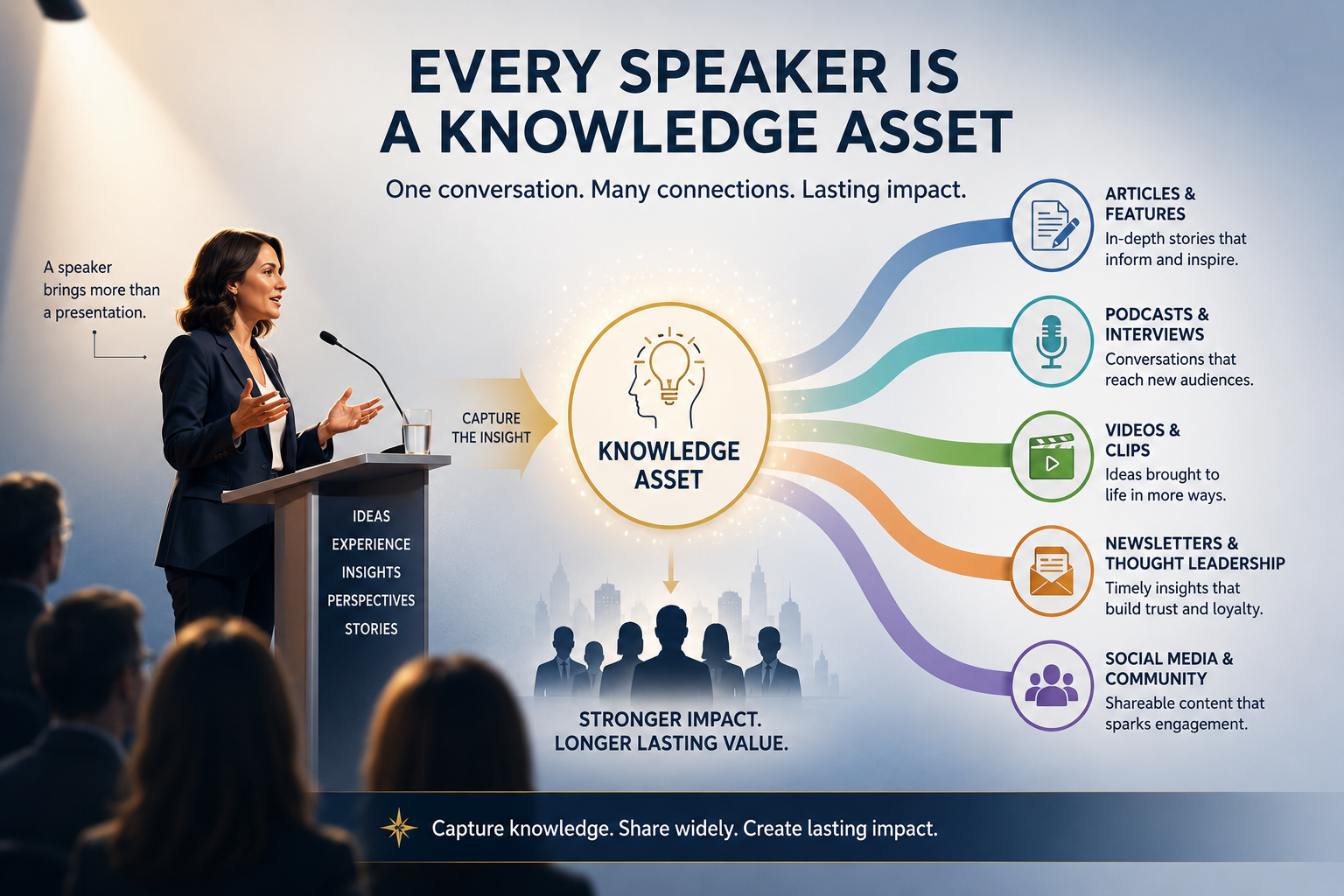
With the speaker’s consent, the conversation can be repurposed into feature articles, executive interviews, opinion pieces, podcasts, newsletters, social media campaigns, video snippets, and educational resources that support your communications throughout the year.
This approach transforms a single conference into an ongoing source of valuable content and keeps your event visible long after delegates have returned to work.
Naturally, transparency is essential. Speakers should be informed beforehand how their contributions may be used, and their views should always be represented accurately and within context. Protecting the integrity of their message builds trust and encourages future collaboration.
Even if journalists are unable to attend your event, the opportunity should not be lost.
Consider appointing professional writers or interviewers to conduct structured conversations with your keynote speakers. The resulting content becomes an owned asset that can be published across your website, newsletter, LinkedIn page, or knowledge hub. It can also be shared with media outlets in the weeks or months ahead when the topic becomes particularly relevant.
Some of the most valuable thought leadership content begins not with a newsroom assignment, but with a carefully planned conversation.
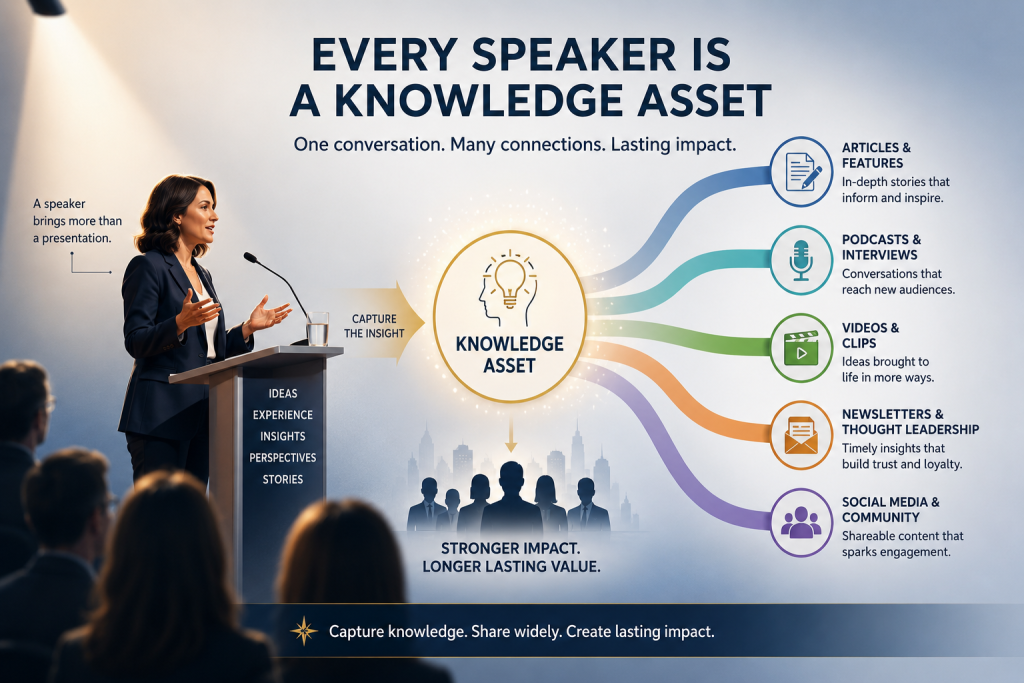
A keynote speaker contributes far more than a presentation.
They bring experience, perspectives, stories, and ideas that deserve a longer lifespan than a single conference session. By planning strategically, facilitating meaningful conversations, and developing quality editorial content, organisers can extend the impact of every speaker while strengthening their own brand, industry leadership, and stakeholder engagement.
If you are already investing in bringing exceptional speakers to your event, it makes sense to maximise the return on that investment.
At WRComms, we work with conference organisers, associations, and businesses to transform keynote presentations into enduring content assets. From facilitating executive interviews and writing in-depth feature articles to developing thought leadership pieces and editorial campaigns, we help organisations capture valuable insights and extend the influence of their events long after the conference has concluded.
Because a great keynote should inspire audiences for an hour—but its ideas can continue creating value for months, or even years, when they are thoughtfully captured and shared.
You may be interested in:

© 2026 Write Right Communications. All Rights Reserved.